Tesla’s long-promised robotaxi story is back at the centre of the EV conversation, with reports pointing to selected Model Y robotaxi rides in Austin as the latest proof point for Elon Musk’s autonomy strategy. For Tesla, this is not just another software milestone. It is a bid to turn millions of connected EVs into a future transport network, and it lands just as rivals are attacking the market from the other direction: cheaper cars, faster product cycles and broader global expansion.
Tesla’s autonomy bet gets real-world attention
The key issue for EV buyers is simple: autonomy is becoming part of the value equation. Tesla has spent years arguing that software, data and vehicle integration will separate its cars from conventional EVs. A limited robotaxi rollout does not instantly make every Tesla a self-driving taxi, and regulators will continue watching closely. But even small public pilots matter because they show how quickly the battleground is shifting from battery range alone to the entire ownership and mobility experience.
That makes the timing important. InsideEVs’ latest look at the robotaxi race notes that Tesla is now competing in a much busier field, with Waymo expanding, Zoox operating, and Uber building partnerships with autonomous-vehicle players. In other words, Tesla is no longer selling a dream into an empty market. It has to prove that its camera-led approach can scale safely and commercially while other companies lean on different sensor suites, fleet models and ride-hailing alliances.
BYD keeps pressure on with bigger global ambitions
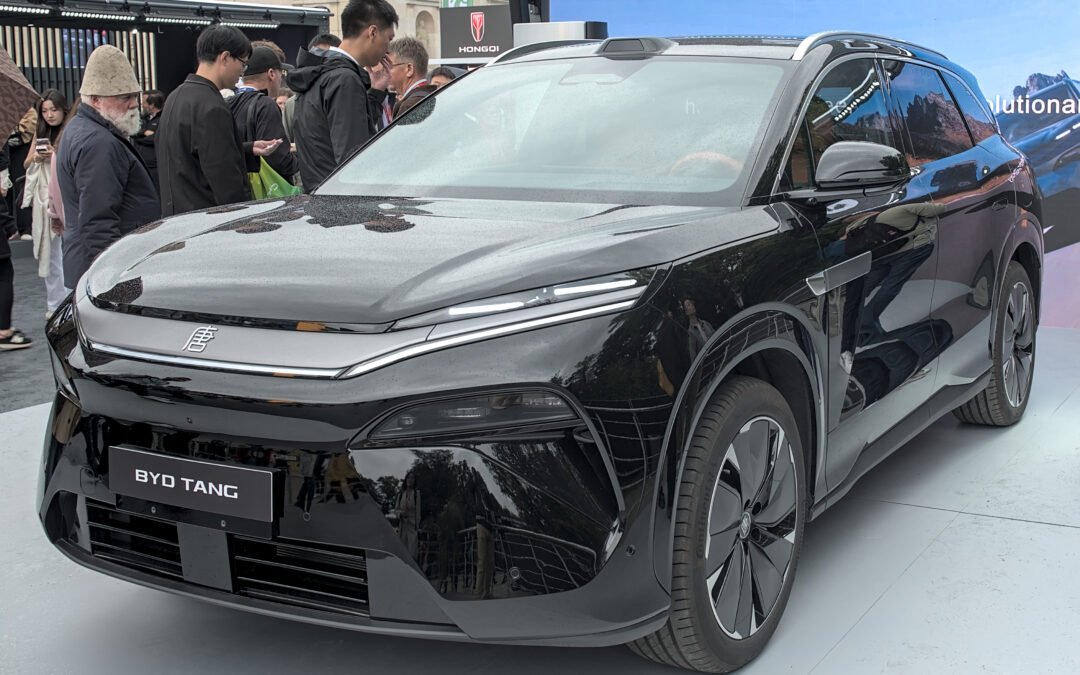
At the same time, BYD is showing why Tesla cannot afford to focus only on autonomy. Electrek reports that BYD’s new flagship Great Tang electric SUV attracted around 150,000 orders before launch in China, with overseas markets including Europe expected to follow by the end of 2026 or early 2027. The message is clear: BYD is no longer merely a value-focused Chinese EV maker. It is pushing into larger, more premium family vehicles that can challenge established SUVs in markets where buyers want space, technology and a sharp price.
That matters for Australia too, even before every global model is confirmed locally. BYD has already built recognition with vehicles such as the Atto 3, Seal and Sealion line-up, and its strength in batteries gives it room to move on price and specification. If larger BYD SUVs continue gaining traction overseas, Australian EV shoppers can expect more competition in the family-car segment, where range, charging speed, warranty support and real-world practicality matter more than headline acceleration figures.
Affordable EVs are improving underneath the headlines
The supporting story this week is that more mainstream EVs are becoming easier to live with. InsideEVs’ coverage of the new Chevrolet Bolt highlights how much attention is being paid to battery buffers, low-charge behaviour and everyday usability. Those details sound less glamorous than robotaxis or 1,500-horsepower flagships, but they are exactly what can make budget-friendly EVs feel less intimidating to new buyers.
Put together, the latest EV news points to a market splitting into several fast-moving lanes. Tesla wants to make software and autonomy the headline. BYD is using scale, batteries and aggressive product planning to push into more global segments. Legacy brands are trying to make affordable EVs more robust and familiar. For enthusiasts, that means 2026 is shaping up as a year where the most interesting electric cars may not be defined by range alone, but by how well they fit into daily life, from commuting and charging to future ride-hailing possibilities.
The takeaway: EV competition is getting sharper and more useful for buyers. Whether Tesla’s robotaxi plan becomes a transport revolution or a slower regulatory grind, the pressure from BYD and improving affordable EVs should keep pushing prices, technology and choice in the right direction.