Australia’s electric-car market just delivered one of its clearest signals yet: the next phase of EV growth is being driven by sharp pricing, Chinese manufacturing scale and familiar names such as Tesla and BYD. New June sales figures reported by The Electric Viking show seven electric models each topping 1,000 sales in Australia for the month, with the Shanghai-built Tesla Model Y leading the pack and BYD taking two of the top three positions.
The headline number is hard to ignore. The Tesla Model Y reportedly logged 8,072 Australian sales in June, well ahead of the BYD Sealion 7 on 4,730 and the BYD Atto 2 on 2,482. Geely’s EX5, Omoda Jaecoo’s J5, Zeekr’s 7X and the MG4 Urban also crossed the 1,000-unit mark. For a market where only one or two EVs would usually reach that level in a given month, it points to a broader consumer shift rather than a one-model spike.
Chinese-built EVs are setting the pace
What makes the result especially interesting is that every model in the top seven is either Chinese-owned or Chinese-built. Tesla is the obvious global brand in the list, but Australian-delivered Model Y and Model 3 vehicles come from Gigafactory Shanghai. BYD, meanwhile, is becoming increasingly difficult to treat as a challenger brand. With the Sealion 7 and Atto 2 both near the front of the table, BYD now has volume entries at different price points and body styles, from family SUVs to affordable compact EVs.
Price is doing much of the heavy lifting. Several of June’s strongest performers sit under or around the A$40,000 to A$50,000 bracket, giving buyers more realistic alternatives to petrol crossovers and small SUVs. That matters because EV adoption is no longer just about early adopters chasing range or acceleration; it is increasingly about whether a household can find a practical car with low running costs at a monthly payment that makes sense.
BYD keeps pushing below and above the mainstream
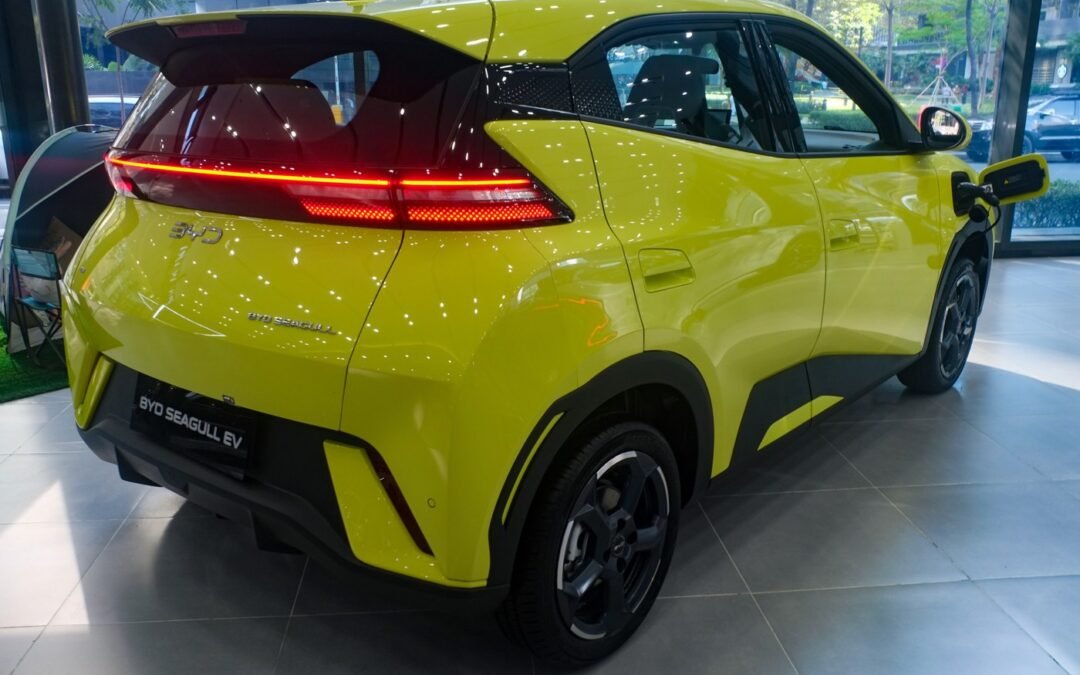
BYD’s product push is not slowing down. Separate reporting says China’s latest regulatory filings reveal an updated 2026 BYD Seagull hatchback with a longer 4,205 mm body, a 2,650 mm wheelbase and a more powerful 95 kW electric motor. The Seagull is already known overseas as one of the world’s most disruptive low-cost EVs, and a larger, stronger version could make it more appealing beyond dense city use if BYD chooses to expand exports.
At the same time, the policy environment around EV technology remains unsettled. New Jersey lawmakers are advancing a bill that would require fully driverless commercial vehicles to use cameras plus two additional sensor types, a rule that would challenge Tesla’s camera-only Robotaxi strategy while fitting the multi-sensor approach used by rivals such as Waymo. It is a reminder that the EV race is not only about batteries and prices; software, regulation and public trust will decide which technologies scale fastest.
Battery news is adding another layer to the story. The Electric Viking also reported the opening of America’s first large-scale sodium-ion battery gigafactory, with initial production capacity already sold out. Sodium-ion chemistry is unlikely to replace lithium-ion in every EV, but cheaper stationary storage can help stabilise grids and support more renewable energy—both essential if millions more electric cars are going to plug in.
For EV enthusiasts, June’s Australian sales mix feels like a preview of the global market ahead: Tesla remains a force, BYD is expanding in every direction, and affordable Chinese-built models are turning electric transport from a niche purchase into a mainstream option. The brands that win from here will be the ones that combine value, charging confidence, smart software and enough supply to meet buyers where they are.