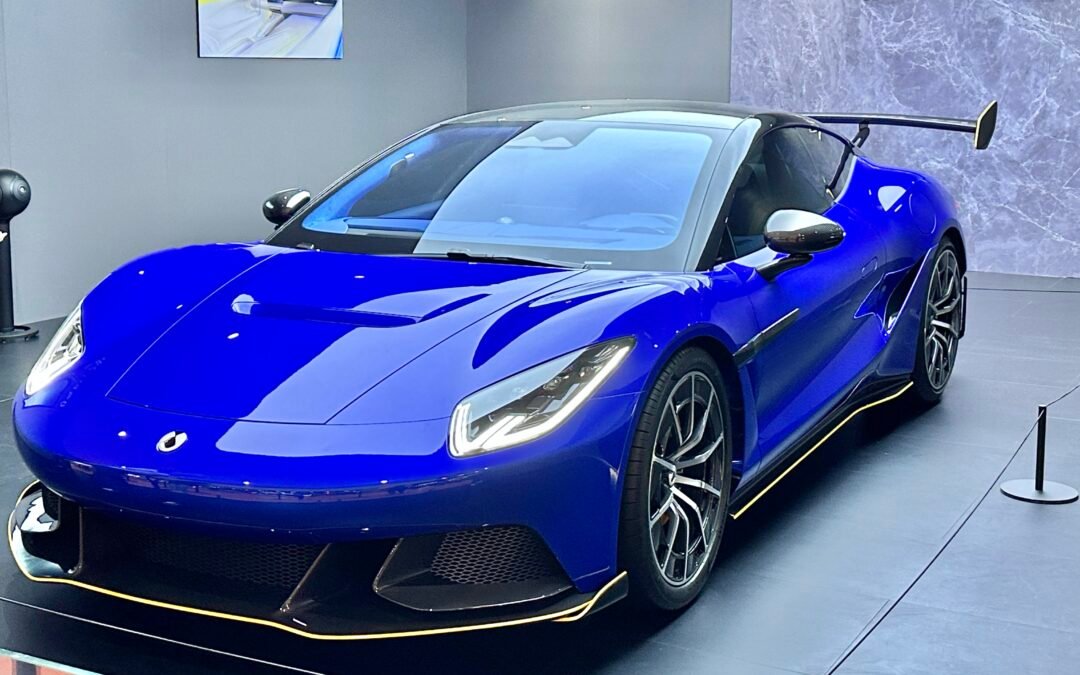
BYD has delivered the latest reminder that the electric-vehicle race is no longer just about sensible commuter cars. Its Denza luxury brand has revealed the Denza Z, a low-slung electric performance car that aims directly at Europe’s sports-car establishment while underlining how quickly Chinese EV makers are climbing the value chain.
The headline numbers are deliberately provocative. Reports from Electrek and other automotive outlets say the Denza Z will be offered with more than 1,500 horsepower in its hottest form, ultra-fast charging capability, and pricing that places it below some versions of the Porsche 911. It is expected to go on sale later this northern summer, with customer deliveries targeted before the end of 2026. For BYD, that makes the Z more than a halo car; it is a rolling advertisement for battery scale, software confidence and global ambition.
BYD moves from value to desire
BYD built its international reputation on attainable EVs such as the Dolphin, Atto 3 and Seal, but Denza shows the company wants a much broader identity. The Denza Z’s compact proportions, aggressive stance and claimed performance place it in a category that used to be dominated by legacy European brands. The point is not simply that BYD can build a fast EV. It is that BYD can now use its battery supply chain, Blade battery experience and manufacturing muscle to challenge prestige brands on performance and price at the same time.
That matters for Tesla, too. Tesla remains the benchmark EV brand for many buyers, and its Model Y and Model 3 still set the pace in several markets. But the Denza Z highlights a different kind of pressure: Chinese groups are no longer only competing at the budget end. They are also trying to win attention, aspiration and media oxygen. If BYD can make shoppers associate its brands with excitement as well as value, Tesla’s advantage as the default EV choice becomes harder to defend.
Policy and sales pressure keeps shifting
The wider EV market is moving just as quickly. In the United States, Electrek reported that California’s new $3,500 EV rebate structure may favour California-headquartered EV-only brands such as Rivian and Lucid over Tesla because of how the programme treats its price cap. Policy details like that can shape showroom traffic almost as much as a new model launch, especially while buyers remain sensitive to monthly payments and incentive rules.
Australia is showing the other side of the story: demand can accelerate when the product mix and pricing are right. The Driven reported earlier this month that Tesla and BYD helped push Australian EV sales to a landmark month, with electric cars reaching a 23.4 percent market share and the two brands shipping more than 19,000 electric cars between them in June. That is an important signal for local buyers because it suggests EVs are becoming mainstream choices, not niche experiments.
Infrastructure still has to keep up. The New York Times reported this week that charging-station growth in the US is continuing even as EV sales have softened, but industry executives still warn that charger availability remains uneven. That is the next battleground for every brand mentioned here. Fast cars and sharp pricing win attention, but reliable charging is what turns curiosity into confidence.
For EV enthusiasts, the takeaway is clear: the second half of 2026 is shaping up as a fight on multiple fronts. BYD is pushing into performance, Tesla is defending its volume leadership, incentives are being rewritten, and charging networks are becoming a competitive weapon. The winners will be the brands that can make electric driving feel exciting, affordable and easy all at once.