
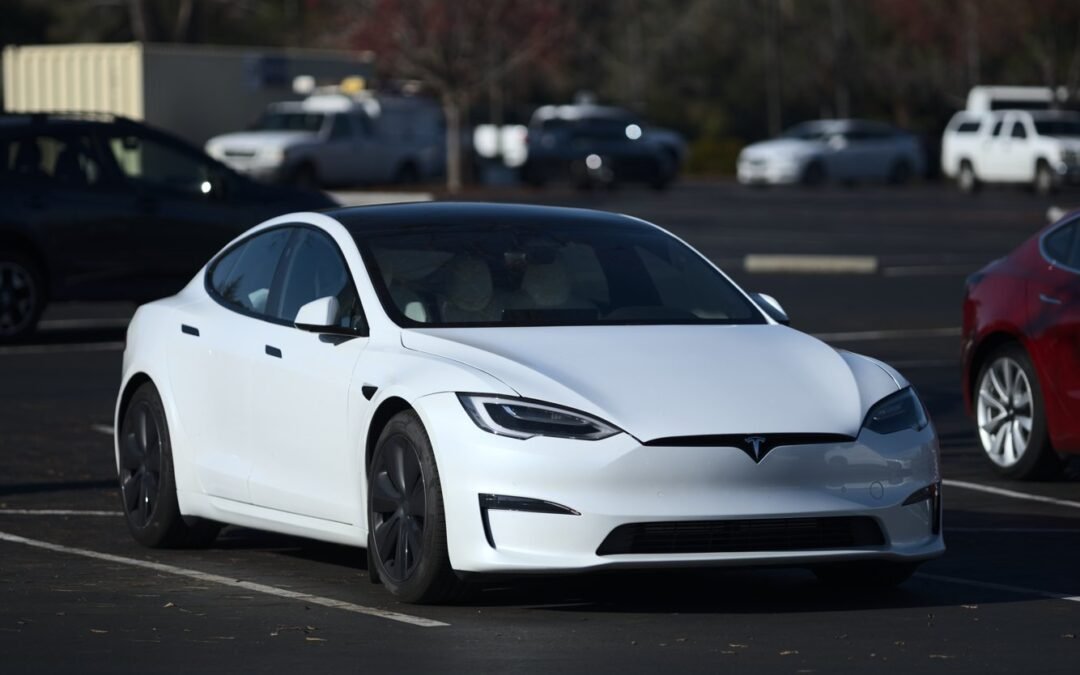
Tesla is turning the page on two cars that defined the modern electric-vehicle era. The company has reportedly announced a limited “Signature Edition” farewell for the Model S and Model X, with just 250 Model S units and 100 Model X units planned. For EV fans, it is more than a trim package: it is a symbolic handover from Tesla’s original luxury halo cars to a market now dominated by high-volume crossovers, software, batteries and fierce global pricing pressure.
A farewell to Tesla’s original flagships
The Model S proved that an electric sedan could be fast, desirable and genuinely long range, while the Model X brought falcon-wing theatre to the premium SUV segment. Both models helped move Tesla from Silicon Valley outsider to benchmark EV brand. A final Signature Edition run gives the pair a collector-style exit, but it also reflects a hard commercial reality: the centre of gravity has shifted to the Model Y, Model 3, Cybertruck and future lower-cost models.
The timing is interesting because Tesla is not short of momentum. Earlier this month, the company reported 480,126 vehicle deliveries for the second quarter of 2026, a strong rebound that beat market expectations and showed the brand can still generate demand when production, pricing and incentives line up. Yet the Model S and Model X no longer carry the volume story. They now represent heritage, brand equity and Tesla’s ability to make aspirational EVs before the rest of the industry caught up.
BYD keeps raising the global pressure
While Tesla manages its product transition, BYD continues to expand beyond China at speed. Fresh UK figures underline the challenge: BYD registered 37,795 vehicles in the first half of 2026, nearly double the same period last year. That growth matters because Europe is becoming a key battleground for affordable EVs and plug-in hybrids, with Chinese brands pushing hard on value, battery know-how and showroom coverage.
Australia will be watching that contest closely. Local EV buyers already compare Tesla’s Supercharger access, software updates and resale strength against BYD’s sharper pricing and expanding dealer footprint. When a brand such as BYD can build scale in markets like the UK, it increases confidence that right-hand-drive supply, parts support and model choice can improve elsewhere too. That is why a European sales surge is not just a European story; it is a signal for every market where mainstream EV adoption is still accelerating.
The broader EV market is also getting deeper. Polestar has announced record retail sales for the first half of 2026, suggesting premium electric alternatives are finding buyers even as competition intensifies. For consumers, that means more choice across price points and body styles. For automakers, it means name recognition alone is not enough; charging experience, efficiency, software updates, warranty confidence and local supply all matter.
For enthusiasts, the Model S and Model X send-off is a reminder of how quickly the EV story has matured. Tesla’s early icons made electric cars exciting. Now the next phase is about scale, affordability and global execution. If Tesla’s Signature Edition models close one chapter, BYD’s European surge and rising competition show exactly why the next one will be even faster-moving.