
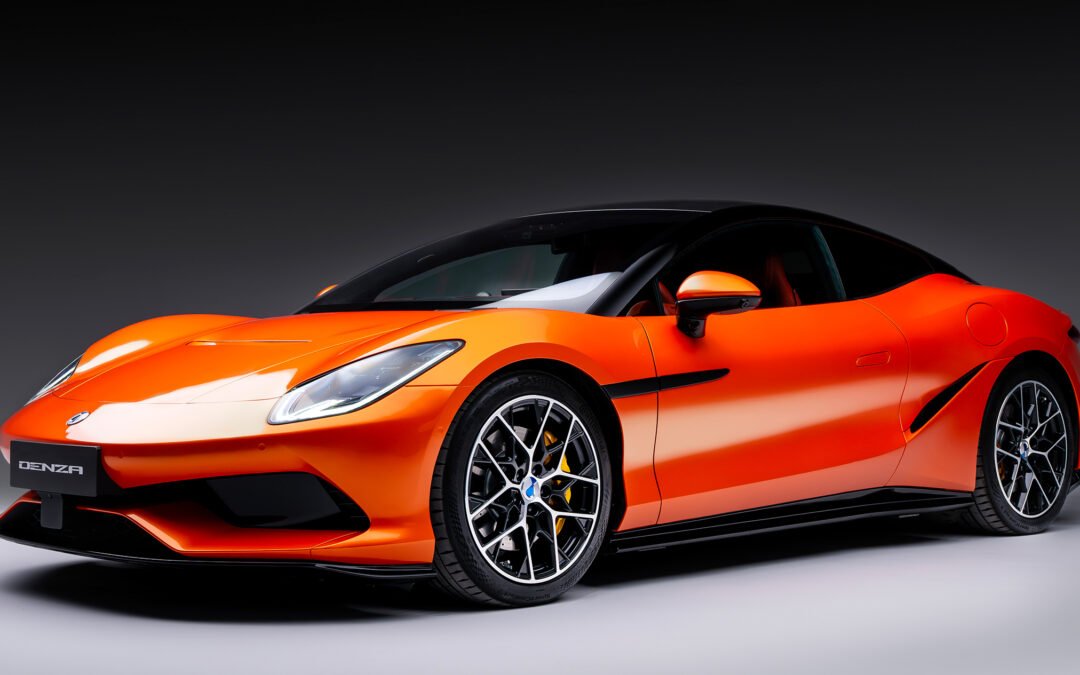
BYD has turned the electric-car arms race up another notch with the Denza Z, a dramatic two-door supercar that puts headline performance numbers usually reserved for million-dollar exotics into a much sharper price bracket. Fresh reports from The Driven, Carscoops and CarNewsChina point to a tri-motor flagship with about 1,582 horsepower, a claimed 0-100 km/h sprint of just 1.96 seconds and a top speed around 350 km/h.
The numbers matter because Denza, BYD’s premium brand, is no longer just pitching electric cars as sensible, efficient alternatives. It is using the Z to make a louder point: Chinese EV makers can now compete for emotion, theatre and performance credibility as well as price and range. The model reportedly starts from 680,000 yuan in China, while early international pricing is being discussed at much higher levels, including figures equivalent to roughly A$270,000 or £142,900 depending on market and trim.
Why the Denza Z is bigger than a halo car
Supercars are rarely volume sellers, but they are powerful brand builders. BYD has already become one of the world’s most important electric vehicle manufacturers through mainstream models and battery scale. A machine like the Denza Z gives the company a poster car: something built to make buyers cross-shop technology, acceleration and desirability rather than simply running costs. If the final production model keeps close to the figures being reported, it will send a clear warning to legacy performance brands that EV speed is no longer their preserve.
The Z also arrives while BYD is expanding its global reach and pushing deeper into markets such as Australia. Local buyers already know the brand through the Atto, Seal, Sealion and Shark lines, and Denza is being positioned as a more premium step above the core BYD badge. Even if the Z remains rare on Australian roads, the technology and brand confidence behind it could flow into more attainable performance EVs over the next few years.
Tesla tackles resale-value nerves
Tesla is fighting a different battle. Electrek reported this week that Tesla is launching a guaranteed future value program for Model 3 and Model Y buyers, aimed at reducing anxiety about resale prices after years of sharp price changes. In Australia, Tesla has also linked up with finance platform Driva for guaranteed future value loans, designed to give buyers a clearer view of what their car could be worth at the end of the finance term.
That might not be as spectacular as a sub-two-second supercar, but it could matter more to everyday EV adoption. Many shoppers like the idea of going electric yet worry about depreciation, battery ageing and fast-changing model cycles. A finance product that locks in a future value does not remove every risk, but it directly addresses one of the practical objections buyers raise when comparing an EV with a familiar petrol or hybrid alternative.
The wider EV market keeps moving
Elsewhere in the EV world, the news cycle remains busy. Electrek highlighted that electric vehicle sales are normalising in the United States while continuing to grow strongly in many other markets. Meanwhile, Carscoops reported a very small Hyundai and Kia recall involving 14 EVs fitted with battery cells that could have misaligned electrodes, with owners advised to park outdoors and limit charging until repairs are completed. The scale is tiny, but it shows how closely battery quality and supplier traceability are being watched.
For EV enthusiasts, the takeaway is simple: the market is maturing at both ends. At the top, BYD’s Denza Z shows electric performance is becoming more global and more aggressive. In the showroom mainstream, Tesla’s resale-value push shows manufacturers are now competing on ownership confidence as much as acceleration, range and charging speed. That combination should make the next wave of EVs faster, smarter and easier to justify.