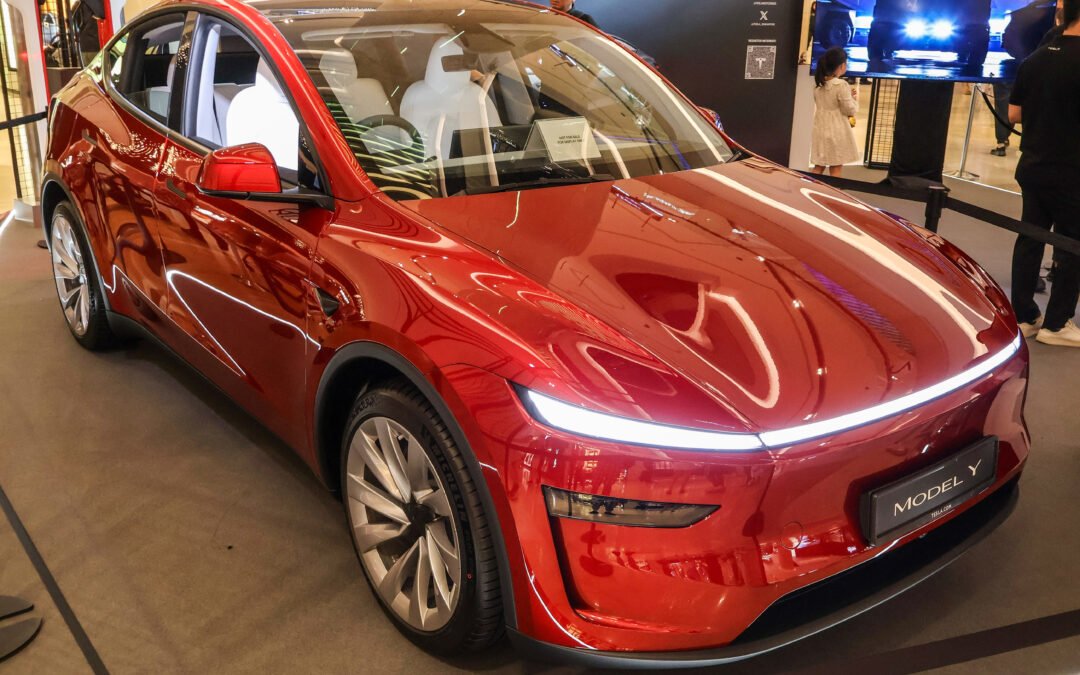
Tesla’s robotaxi ambitions are back at the centre of the electric-vehicle conversation, with fresh reports pointing to a wider rollout of Model Y-based autonomous ride-hailing vehicles in Texas. For EV watchers, the story matters because Tesla is trying to shift the debate away from simple delivery numbers and toward software, autonomy and recurring transport revenue.
Tesla leans harder into autonomy
According to EV industry coverage, Tesla has added more unsupervised Model Y vehicles to its robotaxi fleet, taking the active fleet count in Texas to around 25 vehicles. The numbers are still small, but the strategic message is big: Tesla wants investors and customers to see its best-selling crossover as more than a private car. It is positioning the Model Y platform as a stepping stone to a broader autonomous mobility network while the dedicated Cybercab program moves toward scale.
That makes the robotaxi rollout a useful barometer for Tesla’s next chapter. The company remains one of the world’s most recognisable EV brands, but it is fighting a tougher market than it enjoyed during the early Model 3 and Model Y boom. Price competition is fierce, regulators are watching driver-assistance claims closely, and buyers now have more electric SUVs to choose from. A safe, reliable and commercially useful robotaxi service would give Tesla a powerful point of difference. A slow or messy rollout would hand rivals another opening.
BYD keeps the pressure on
The biggest pressure point remains BYD. Reuters recently reported that BYD chairman Wang Chuanfu expects the Chinese giant to become the world’s largest automaker within five years, an ambitious claim that reflects the company’s momentum in batteries, plug-in hybrids and full EVs. BYD has already become a global reference point for lower-cost electrification, helped by its Blade Battery technology and a deep model range stretching from city cars to family SUVs and premium sub-brands.
BYD’s Australian push is especially relevant for local buyers. The Driven has reported that BYD has been moving thousands of new-energy vehicles into Australia to meet demand, after overtaking Tesla as the country’s most popular electric brand earlier in 2026. That is a sharp reminder that the EV race is no longer just about who builds the most advanced car. Supply, pricing, dealer reach, finance offers and right-hand-drive availability can decide what people actually buy.
Charging speed and model choice are becoming battlegrounds
Beyond the Tesla-versus-BYD headline, the broader EV market is moving quickly. Chinese brands are putting heavy emphasis on ultra-fast charging, longer-range plug-in hybrids and high-value electric SUVs. In Europe and Australia, established carmakers are responding with sharper pricing, more compact electric crossovers and improved charging partnerships. The result is a market where yesterday’s premium features can become tomorrow’s entry-level expectations.
For consumers, that competition is mostly good news. Faster charging reduces range anxiety, more models improve choice, and aggressive pricing puts pressure on every manufacturer to deliver better value. For automakers, it is less comfortable. Tesla has to prove autonomy can become a real business, BYD has to manage global expansion and regulatory scrutiny, and legacy brands have to defend market share while funding the transition away from combustion engines.
The takeaway for EV enthusiasts is simple: the next phase of the electric-car race will not be won by battery range alone. Autonomy, charging speed, software, production scale and local availability are all converging. Tesla’s robotaxi push may be today’s headline, but BYD’s rise and the wider surge of competition mean the EV market is becoming faster, tougher and far more interesting.