
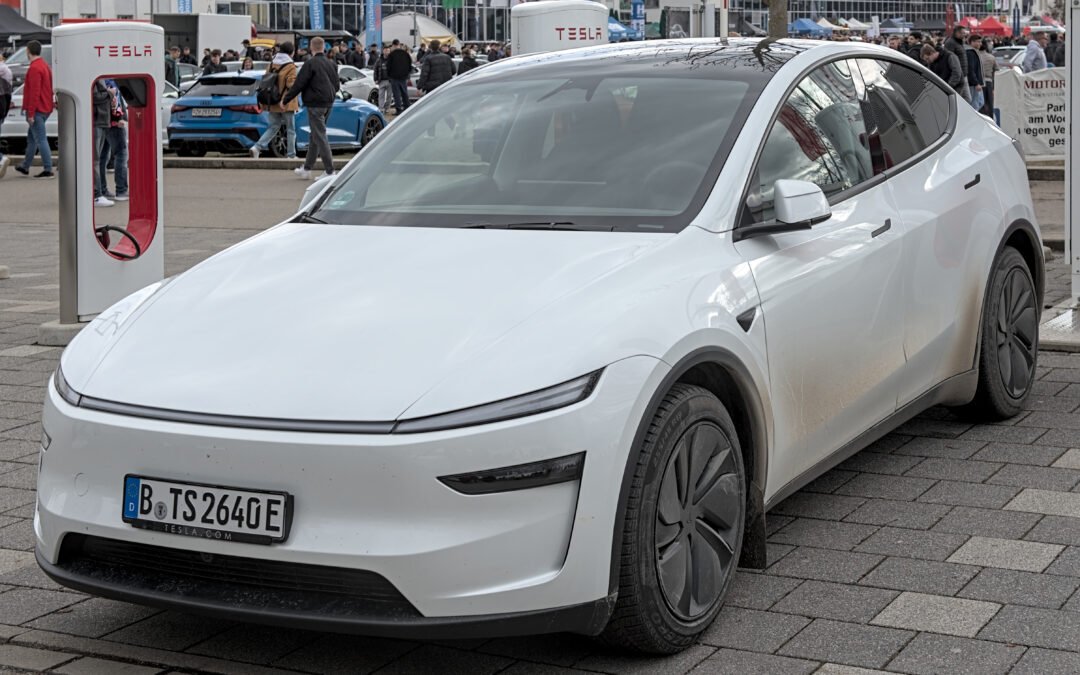
Tesla has given the electric-car market a jolt of confidence, reporting more than 480,000 vehicle deliveries in the second quarter of 2026 after a choppy period for demand. The headline number was well ahead of many market expectations and marks a sharp rebound from the company’s first-quarter result of 358,023 deliveries. Yet the celebration was not completely straightforward: investors still sent Tesla shares lower, a reminder that the EV race is now judged not just on volume, but on margins, inventory, product freshness and the speed of global competition.
Tesla rebounds, but Wall Street wants more
Tesla said it produced more than 450,000 vehicles and delivered more than 480,000 in Q2, while also deploying 13.5 GWh of energy storage products. That is a strong operational update by almost any traditional automotive measure, especially after two consecutive years in which Tesla’s annual vehicle sales had been under pressure. The result suggests the brand can still generate bursts of demand when pricing, availability and market conditions line up.
The market reaction tells the other side of the story. CNBC reported that Tesla shares fell about 7% despite the stronger delivery figure, with investors looking beyond the quarterly beat. For Tesla, the questions are increasingly about how sustainable the rebound is, whether price adjustments have protected or squeezed profitability, and how quickly refreshed models and software-led features can keep buyers engaged. The company still has enormous scale, but it no longer has the EV conversation largely to itself.
BYD’s export machine keeps accelerating
That is where BYD comes in. Fresh June data showed the Chinese new-energy giant sold 403,472 vehicles for the month, with overseas demand doing much of the heavy lifting. CnEVPost reported that BYD’s overseas sales reached a record 175,349 units in June, nearly 95% higher than a year earlier and equal to more than 43% of its monthly NEV sales. Electric Cars Report also noted that improving production capacity and exports helped offset a more challenging domestic market.
BYD’s momentum matters because it is broadening the contest from a Tesla-versus-China story into a genuinely global fight. The company is pushing into Europe, Southeast Asia, Latin America and other growth markets with a mix of battery-electric and plug-in hybrid models. Earlier reporting also pointed to BYD delivering 557,090 fully electric vehicles in the second quarter, putting serious pressure on Tesla’s global BEV leadership. For shoppers, that rivalry is good news: more competition usually means sharper pricing, faster technology upgrades and a wider choice of body styles.
Charging networks are filling in the gaps
Beyond the sales race, infrastructure continues to move in the background. Kempower and PowerUp America opened a new public DC fast-charging site in Manchester, Kentucky, the first in a planned 12-site rollout across the U.S. Southeast. It is not as flashy as a new flagship EV, but these corridors are critical. Reliable chargers in regional locations make electric driving more practical for families, commuters and road-trippers who do not live in the biggest coastal cities.
The takeaway for EV enthusiasts is clear: Tesla is back to posting big delivery numbers, but BYD is scaling internationally at a pace that keeps the pressure high. Add faster charging rollouts and expanding model choices, and the second half of 2026 is shaping up as a competitive, buyer-friendly phase for electric transport.