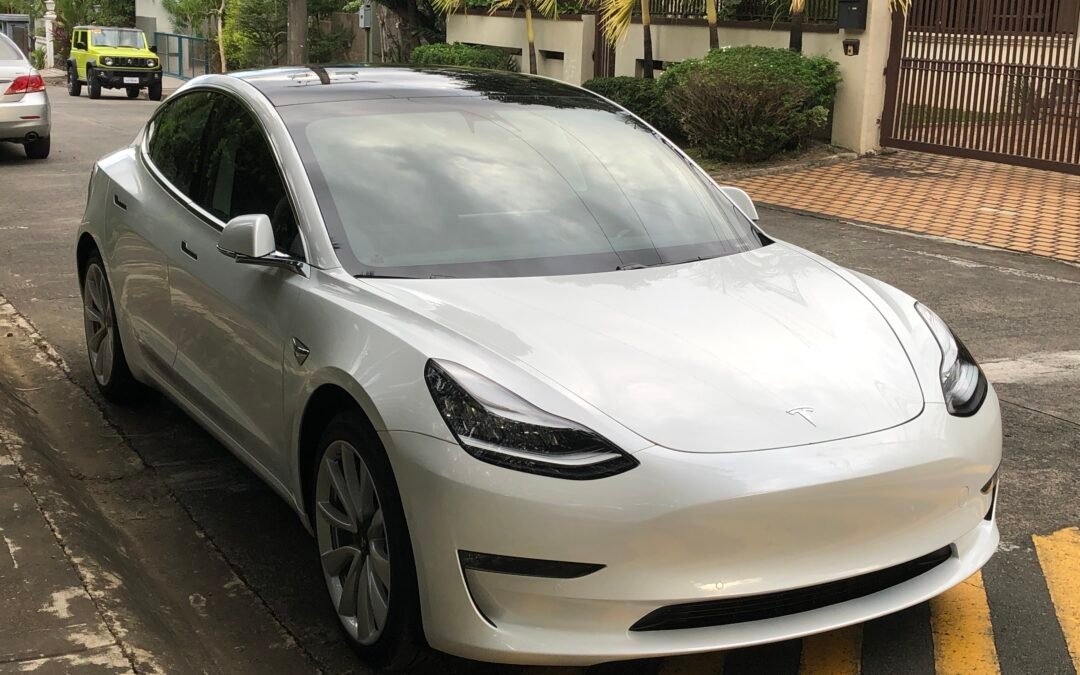
Tesla is back at the centre of the electric-car safety debate after the company confirmed that Full Self-Driving was engaged in a fatal Model 3 crash in Katy, Texas. According to reporting from Electrek, Tesla says the driver manually overrode the system by pressing the accelerator pedal to 100 percent, sending the car to 73 mph before it struck a home. For EV buyers and enthusiasts, the important question is bigger than one crash: how should advanced driver-assistance systems behave when a human suddenly needs to take over?
Tesla’s FSD explanation raises new questions
Tesla’s position is that the accelerator input was a driver override, not an autonomous command. That detail matters, but it does not end the discussion. Full Self-Driving remains a supervised Level 2 system, meaning the driver is legally and practically responsible for monitoring the road. The uncomfortable grey area is that the more capable these systems feel, the easier it is for drivers to become mentally or physically out of the loop. If an unexpected manoeuvre triggers a panic response, the takeover can be messy, late or wrong.
The case also arrives while regulators and courts are paying closer attention to how Tesla describes and monitors its driver-assistance technology. For mainstream EV adoption, trust is now as important as range or charging speed. Buyers want smarter cars, but they also want clear limits, robust driver monitoring and conservative system behaviour in residential streets. Tesla’s software-first approach remains one of the industry’s biggest differentiators, yet every high-profile incident adds pressure for better safeguards and more transparent crash data.
BYD keeps pushing the hardware race
While Tesla wrestles with autonomy headlines, BYD is pushing hard on batteries, charging and model variety. CarNewsChina reports that BYD’s Denza brand has launched a refreshed N8L plug-in hybrid SUV in China with a 75.26 kWh LFP battery, up to 430 km of electric range on the CLTC cycle and claimed peak DC charging of 728 kW. Pricing starts at 319,800 yuan, roughly US$47,200, and the SUV uses a 1000V architecture designed for BYD’s rapid-charging ecosystem.
BYD is also preparing the Seal 08, a large flagship sedan that CarNewsChina says will use an 800V platform, second-generation Blade Battery technology, rear-wheel steering and the company’s latest driver-assistance hardware. The headline claim is bold: up to 900 km of electric range and the ability to add 400 km in five minutes under ideal flash-charging conditions. Those figures will need real-world testing, but they show where the competitive battle is moving. Range anxiety is being attacked not only with bigger batteries, but with higher-voltage platforms and charging networks that can make long stops much shorter.
Battery health remains part of the buying equation
Another useful reminder came from InsideEVs, which highlighted an ex-rental Tesla Model 3 that had already lost about 20 percent of its battery capacity by 122,000 miles. The interesting part is what happened next: its decline slowed sharply, slipping from roughly 80 percent health to 76 percent in a year, then to 75 percent over the following 14 months. The lesson for used-EV shoppers is that battery degradation is not always a straight-line countdown. Early abuse, frequent fast charging and high mileage can hurt a pack, but a stable battery can still have years of useful service left.
The EV market is maturing fast, and this week’s news shows both sides of that progress. Tesla’s challenge is proving that clever software can be supervised safely and explained honestly. BYD’s challenge is turning spectacular charging and range claims into dependable everyday ownership. For drivers, the takeaway is simple: the next great EV will not be judged on one headline feature, but on the full package of safety, efficiency, charging speed and long-term durability.