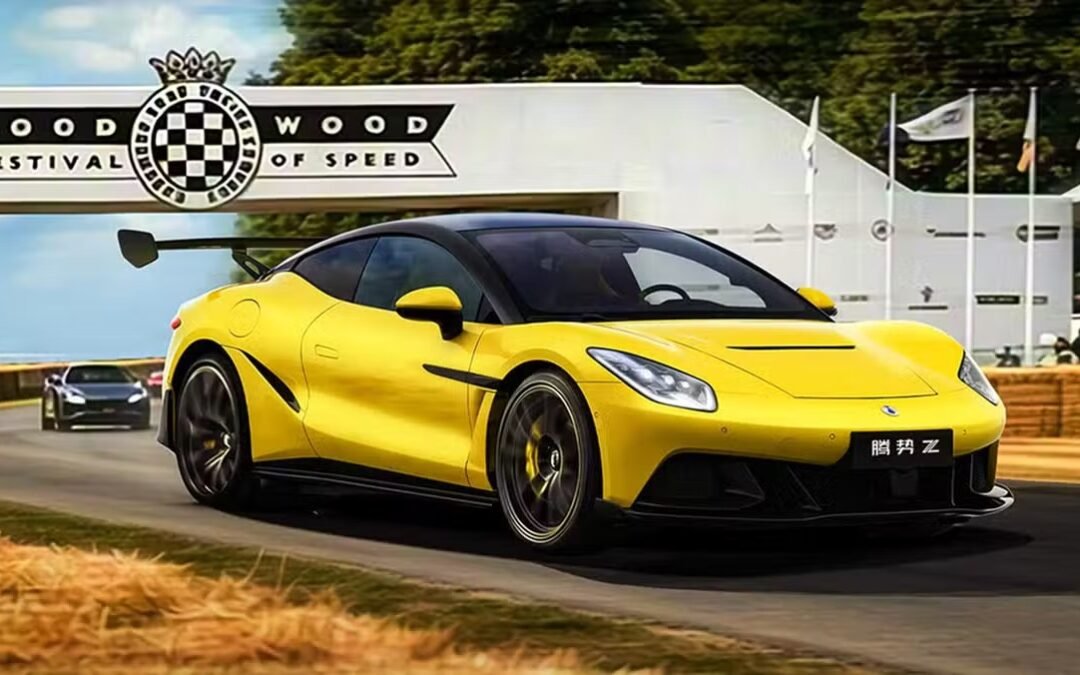
BYD’s premium Denza brand is preparing to put its new Z electric grand tourer on a global stage, and the timing could hardly be better. The Chinese giant has spent the past few years turning affordable EV momentum into a worldwide export push; now it wants to prove it can also build an aspirational performance car that gets cross-shopped against Porsche, Lotus and Tesla’s quickest models.
According to CnEVPost, Denza will present the Denza Z at the Goodwood Festival of Speed in the UK on July 9, giving the sleek electric GT one of the highest-profile launch pads in the enthusiast calendar. The model has already been teased and spotted publicly, and the message is clear: BYD does not want to be known only for value-packed crossovers and commuter cars. It wants a halo car with enough design drama and performance credibility to pull attention away from Europe’s established sports-car names.
Why Denza Z matters
The Denza Z arrives as BYD keeps pushing upmarket through its Denza, Fang Cheng Bao and Yangwang sub-brands. That strategy matters because electric platforms make instant torque and high output easier to deliver, but premium buyers still expect sharp handling, cabin polish, software depth and a brand story. If Denza can package BYD’s battery expertise with genuine GT-car theatre, it could give the company a stronger calling card in Europe, Australia and other markets where Chinese EVs are moving from curiosity to mainstream consideration.
There is also a Tesla angle. Tesla remains the global reference point for EV acceleration, charging convenience and software-led ownership, but the market is no longer waiting for one company to define the category. Reuters reported last week that Tesla’s second-quarter deliveries beat expectations, helped by improving European sales, while EV-focused outlets noted the quarter was one of the company’s strongest. Even so, BYD’s fast product cadence shows how quickly the competitive field is widening. A Denza GT will not outsell a Model Y, but it can change perceptions of what a BYD-backed brand is capable of building.
The wider EV week
Beyond BYD, the EV sector is showing both growth and growing pains. Electrek reported that Ford is recalling more than 42,000 Mustang Mach-E electric SUVs, a reminder that legacy automakers still have to prove quality at scale as they electrify familiar nameplates. Recalls are not unusual in the car business, but EV buyers are especially sensitive to software, battery and drivetrain reliability because many are switching technologies for the first time.
Rivian, meanwhile, is raising fresh capital for its R2 push, with Electrek reporting a 75 million-share sale aimed at bringing in roughly $1.5 billion. That move underlines how expensive the next phase of EV growth will be. Building a desirable electric SUV is one challenge; funding factories, suppliers, service networks and production ramps is another. Rivian’s smaller R2 is expected to be a volume-defining product, so the financing story is just as important as the vehicle itself.
For EV enthusiasts, the takeaway is that the market is getting more interesting and less predictable. BYD’s Denza Z suggests Chinese brands are ready to fight for emotion as well as efficiency, Tesla’s delivery rebound shows the incumbent is far from finished, and Ford and Rivian highlight the practical hurdles behind every glossy launch. The next wave of electric cars will not be won by specs alone; trust, charging, software, design and execution will decide who keeps buyers coming back.