
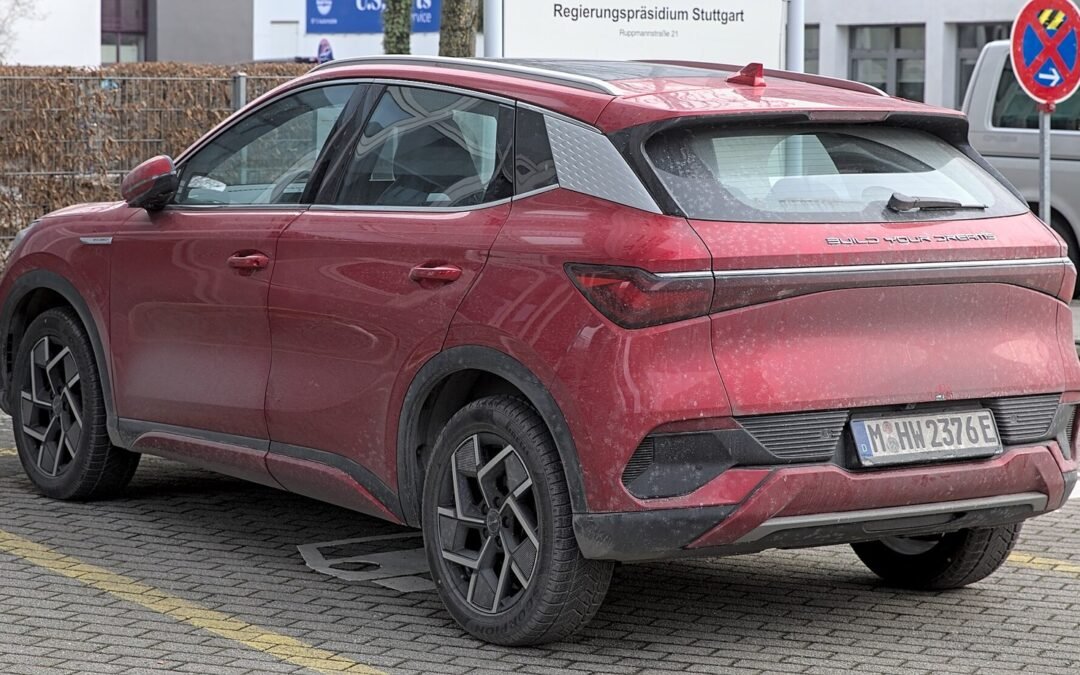
Australia’s new-car market has just delivered one of the clearest signs yet that electric vehicles are no longer a side story. In June 2026, BYD came within a few hundred sales of Toyota, while the Tesla Model Y topped the national model chart. For a market that has traditionally been dominated by utes, SUVs and established Japanese brands, that is a genuine turning point.
BYD closes in on the top spot
According to the latest VFACTS-based market reporting from carsales Business, Australia recorded its biggest new-vehicle month ever in June, with 140,058 deliveries. Toyota still held first place with 19,124 vehicles, but BYD was almost level with 18,881 deliveries, up sharply year-on-year and just 243 vehicles behind the long-time market leader. That is remarkable for a brand that was still building mainstream recognition in Australia only a few years ago.
The numbers also show how quickly the broader mix is changing. Battery-electric vehicles reached a record 23.3 per cent share of deliveries in June, helped by a wave of new models, sharper pricing and improved supply. BYD’s growth has not come from one halo car alone; its Australian momentum has been built around a widening showroom that includes affordable EVs, plug-in hybrids and family-friendly SUVs. The result is a brand now competing not merely with Tesla, but with the biggest names in the total car market.
Tesla Model Y remains the benchmark
Tesla still has the single-model bragging rights. The Model Y was reported as Australia’s best-selling vehicle for a second consecutive month, with an 8,072-result that put it more than 2,000 units clear of the next model. That matters because the Model Y is not just winning the EV race; it is beating petrol, diesel and hybrid rivals on the same national sales ladder.
Globally, Tesla’s latest investor update underlines why the brand remains central to the EV conversation. The company said it produced more than 450,000 vehicles and delivered more than 480,000 in the second quarter of 2026, alongside 13.5 GWh of energy-storage deployments. Even as competitors crowd into the segment, Tesla’s manufacturing scale, software ecosystem and Supercharger reputation continue to set the benchmark many rivals are chasing.
Technology and price pressure are accelerating the shift
BYD’s challenge is not just about sales volume. The company is also pushing hard on battery and charging technology. Earlier this year, BYD detailed its Blade Battery 2.0 and FLASH Charging plans, claiming peak charging power of up to 1,500kW and a 10-to-97 per cent refill in as little as nine minutes under stated conditions. Real-world rollout, charger availability and vehicle compatibility will decide how quickly those promises reach everyday drivers, but the direction is obvious: charging speed is becoming a front-line battleground.
For Australian buyers, the bigger message is choice. Tesla’s Model Y continues to prove that EVs can sit at the top of the national sales chart, while BYD is showing that aggressive pricing and a broad product strategy can move a brand from challenger to near-market leader in record time. Add improving public charging, more fleet interest and tighter emissions expectations, and the local EV market looks set for another highly competitive half-year.
The takeaway for EV enthusiasts is simple: the next phase will not be about whether electric cars can compete. June’s numbers suggest they already are. The more interesting question is which brand can combine supply, technology, trust and value quickly enough to define the new mainstream.