
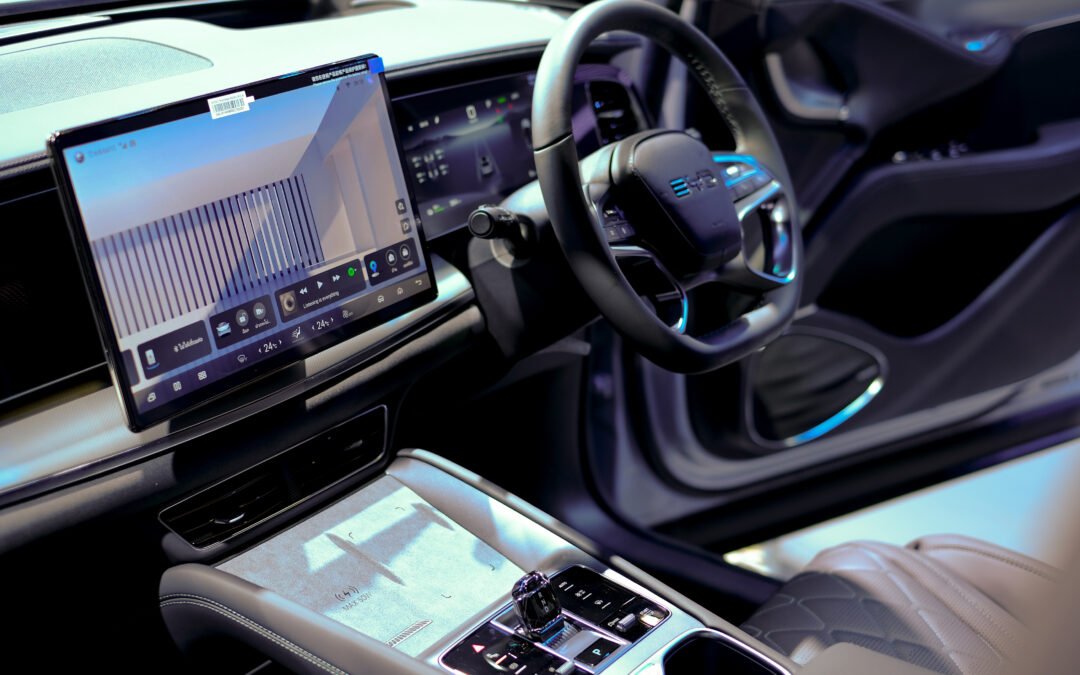
Australia’s electric-car market has just delivered one of its clearest signals yet: EVs are no longer a side story. Fresh June figures from Zecar, drawing on Electric Vehicle Council data, show both BYD and Tesla posted record local results, with BYD delivering 18,881 vehicles and Tesla selling 8,670 EVs. Even more striking, the Tesla Model Y was reported as Australia’s best-selling car outright for the second month running, with 8,072 deliveries.
BYD turns scale into momentum
BYD’s June result was the headline-grabber because of its sheer size. The brand’s 18,881 Australian deliveries made it the company’s best month on record locally and lifted its first-half 2026 total to 52,335 vehicles. Zecar reported that the number was boosted by extra factory support and a special shipment of almost 5,000 BYD and Denza vehicles aboard the BYD Zhengzhou. That matters because it shows BYD’s growth is not only about cheap pricing or clever model timing; it is increasingly about logistics, supply and the ability to flood a market when demand is hot.
The Australian surge fits a wider global pattern. CnEVPost reported that BYD sold 403,472 new-energy vehicles wholesale in June, up 5.46 percent year-on-year, while overseas sales reached a record 175,349 units. That means international markets accounted for more than 43 percent of BYD’s June volume. For a company that built its early dominance at home in China, the export shift is a major competitive warning to legacy automakers and to Tesla alike.
Tesla still has a powerful local weapon
Tesla’s Australian performance shows the brand is far from fading. A record 8,670 EVs in June is a substantial result, and the Model Y’s 8,072 deliveries underline just how strongly one vehicle can shape national sales charts. The Model Y’s success also highlights a broader truth about EV adoption: mainstream buyers are gravitating toward familiar, practical electric SUVs rather than niche city cars or expensive halo models.
Globally, however, the Tesla-BYD contest is tightening in different ways. Electric Cars Report noted Tesla’s second-quarter 2026 deliveries surged 25 percent year-on-year, while Electrek reported BYD delivered 557,090 fully electric vehicles in Q2, putting the Chinese giant back in front in the global battery-electric race. The numbers are not perfectly identical in scope across every report, but the direction is clear: Tesla remains a volume powerhouse, while BYD’s export machine is accelerating fast.
Affordable EVs are changing the debate
The supporting trend is price. The Guardian recently examined whether the United States risks missing the “golden age” of affordable EVs as China-backed competition reshapes Europe and other markets. Australia is already seeing some of that pressure, with buyers responding to a wider spread of electric SUVs, sedans and plug-in hybrids. If early estimates of EV share near 30 percent for June are confirmed, the local market will have moved from gradual growth to a genuine breakout month.
For EV enthusiasts, the takeaway is simple: the next phase of the electric transition will be fought on supply, pricing and everyday usability. BYD is proving it can scale quickly beyond China, while Tesla still owns one of the world’s most compelling EV nameplates in the Model Y. Australian buyers are the immediate winners, with more choice, sharper competition and a much faster road to electric motoring.