
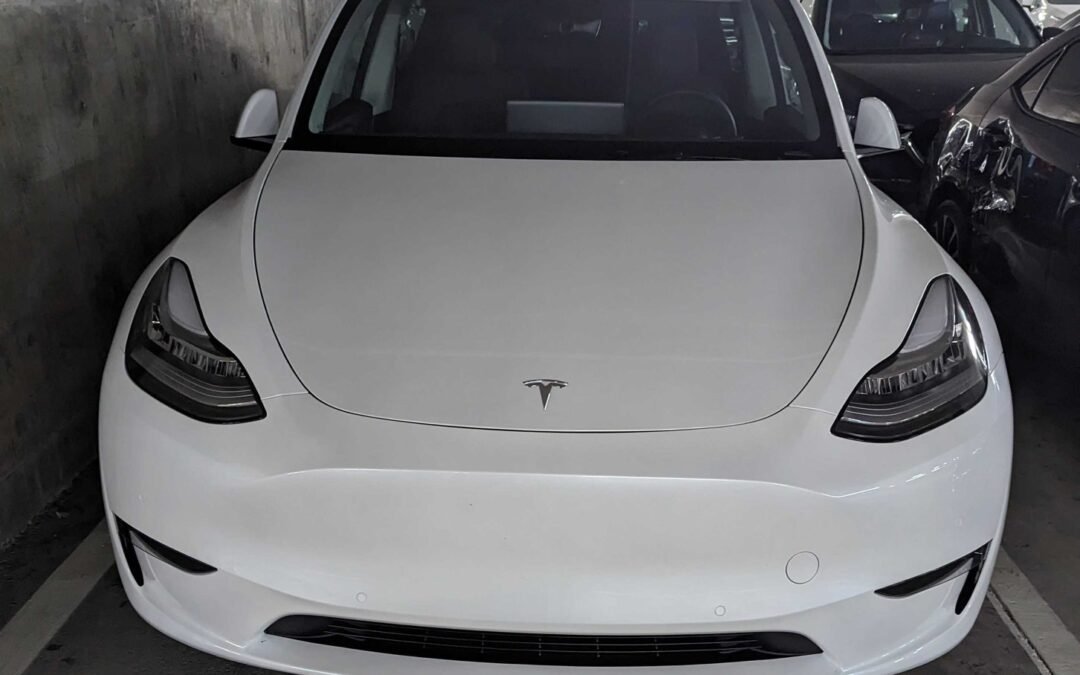
Tesla is back under the safety spotlight after US regulators opened an investigation covering about 1.2 million Model 3 and Model Y electric vehicles. The probe does not amount to a recall, but its scale—and the possibility that a front suspension component can detach with little warning—makes it the most consequential EV development of the past day for owners and the wider industry.
What the Tesla investigation covers
According to Reuters reporting carried by multiple outlets and a July 31 report from Electrek, the US National Highway Traffic Safety Administration’s Office of Defects Investigation has received 156 complaints alleging detachment of the front lower lateral link. The preliminary evaluation covers certain 2018–2020 Model 3 sedans and 2021–2023 Model Y crossovers. In most cases reviewed by the agency, the reported failure occurred without advance warning, although some drivers reported hearing noises beforehand. No injuries or deaths were reported in the information available at publication time.
The lower lateral link helps locate the wheel and maintain directional control, so a separation can be more serious than an irritating rattle or routine wear item. NHTSA will now assess the scope, frequency and safety consequences of the alleged defect. It can close the investigation without further action, expand it into a more detailed engineering analysis, or ultimately push for a recall. For Tesla drivers, the practical message is not to panic but to pay attention: unusual front-end noises, changes in steering feel or visible wheel alignment problems deserve prompt professional inspection. Owners should also monitor Tesla and NHTSA recall channels using their vehicle identification number.
BYD raises the fast-charging stakes
While Tesla faces regulatory scrutiny, BYD is keeping competitive pressure high with the Qin Max. Fresh images released ahead of its expected August launch show a larger electric sedan positioned above the Qin L. Reports from Electrek and CarNewsChina indicate two Blade Battery options: approximately 52.9 kWh and 64.3 kWh, with claimed CLTC driving ranges of 530 km and 630 km respectively. The higher-output version is reported to use a 240 kW motor, while BYD is promoting fast-charging capability as a central selling point. Those laboratory-cycle range figures should not be read as direct real-world estimates, but they underline how quickly mainstream Chinese EV specifications are advancing.
More room for electric families
Hyundai also used the past day to broaden the EV conversation beyond sedans and SUVs, revealing a seven-seat electric minivan concept for Indonesia. The company says the people mover is intended for local production by the end of 2026. That matters because family-focused electric vans remain scarce in many markets, especially at accessible prices. Local assembly in a fast-growing Southeast Asian car market could help Hyundai tailor cost, cabin packaging and charging requirements to regional buyers rather than treating the vehicle as a simple global export.
Taken together, the day’s news captures the EV market’s two-track reality. Mature, high-volume models must prove their durability under increasingly close regulatory scrutiny, even as newer rivals race ahead with bigger ranges, quicker charging and more useful body styles. Tesla’s investigation will be watched for any escalation, while BYD and Hyundai are giving buyers fresh reasons to expect more from the next generation of electric cars.