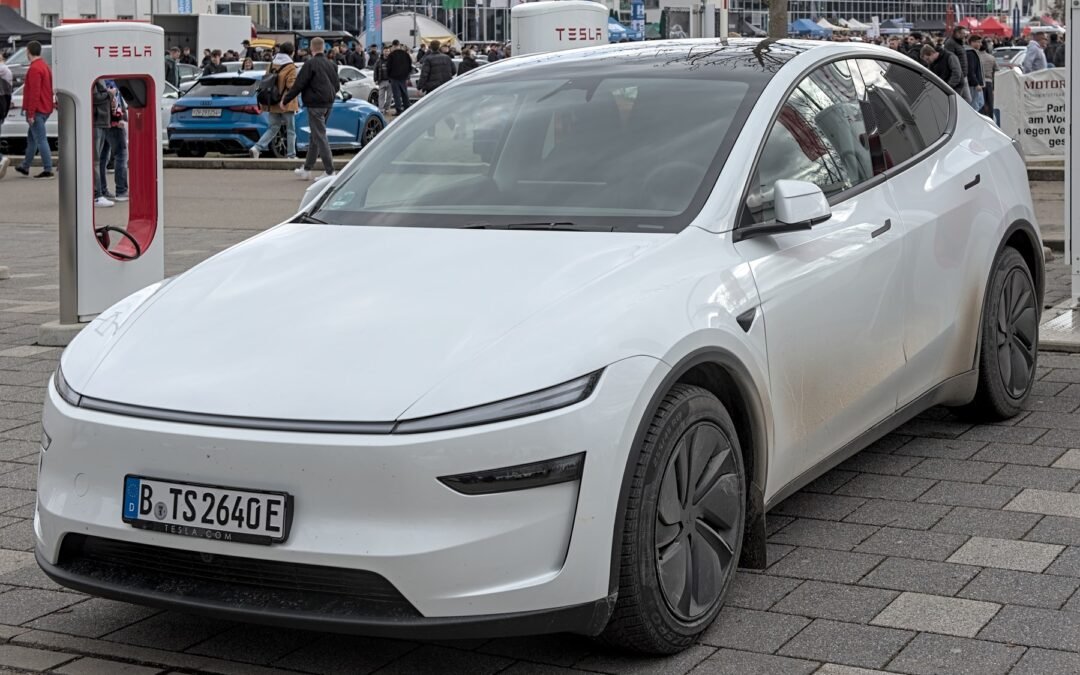
Tesla’s Full Self-Driving Supervised software has passed a major real-world milestone in Australia and New Zealand, with owners clocking more than 160 million kilometres during its first year in the two markets. The scale of that rollout makes this one of the region’s largest public tests of advanced driver assistance—and ensures the argument over what the technology can, and cannot, safely do will only intensify.
A vast supervised-driving data set
According to figures reported by The Driven, Tesla says vehicles using FSD Supervised recorded 40 per cent fewer reported collisions per kilometre than Teslas being driven manually in Australia and New Zealand. That is an eye-catching claim, but it needs context: the comparison comes from Tesla’s own fleet data rather than an independent, peer-reviewed assessment, and “reported collisions” may not capture every incident. FSD Supervised is also not an autonomous chauffeur. The driver must remain attentive, keep control of the car and be ready to intervene at any moment. Even so, 160 million kilometres gives Tesla a substantial local data set spanning left-hand traffic, urban streets, motorways and varied road markings.
The milestone arrives as Tesla puts more attention on its autonomous ambitions in Australia. Carsales reported that the two-seat Cybercab has made its Australian debut in Sydney, offering the public a close look at a vehicle designed without conventional pedals or a steering wheel. A display appearance is not the same as regulatory approval or a confirmed local launch, but it makes Tesla’s direction clear: today’s supervised software is being positioned as a bridge toward purpose-built robotaxis. Regulators will be watching the evidence closely, particularly how intervention rates, crashes and edge cases are measured and disclosed.
BYD faces a large brake-related recall
Tesla’s progress lands amid an equally busy week for its fiercest global rival. Gasgoo and Reuters have reported that BYD is recalling 183,211 Tang and Qin-series vehicles in China over a brake-pedal component risk. The campaign concerns selected older vehicles and involves replacing the affected part without charge. There is no indication in those reports that Australian-delivered BYDs are included. The episode is nevertheless a reminder that rapid growth brings an enormous after-sales responsibility: as Chinese EV makers expand abroad, transparent recalls and fast access to parts will matter almost as much as range, price and charging speed.
Older EVs strengthen their reliability case
There was also encouraging news for buyers considering a used electric car. A new analysis highlighted by The Guardian examined about 47 million British MOT roadworthiness tests and found high-mileage EVs were 25 per cent less likely to fail than comparable petrol cars. Roadworthiness tests do not directly measure battery capacity, repair costs or every aspect of ownership, so the result should not be read as a complete reliability verdict. It does, however, challenge the assumption that an EV becomes inherently fragile once the odometer climbs. Fewer moving drivetrain parts may be translating into a meaningful durability advantage, while battery-health checks remain essential for any used-EV purchase.
For EV enthusiasts, the takeaway is less about declaring a winner than demanding better evidence. Tesla’s expanding supervised-driving fleet, BYD’s recall response and the growing pool of high-mileage electric cars all produce data that can improve the next generation of vehicles. The brands that publish clear safety results, support cars after the sale and turn real-world lessons into dependable updates will earn the most trust.