
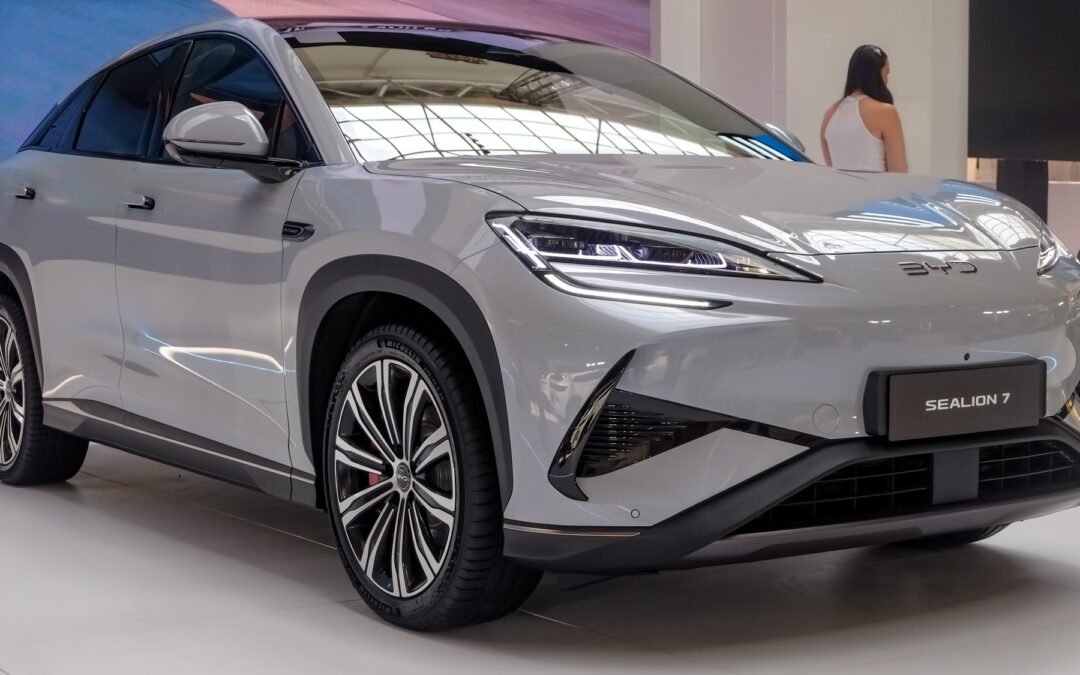
BYD has rewritten its Australian privacy policy, removing references to China and surveillance just as connected-car data becomes a bigger issue for drivers, regulators and the wider electric-vehicle industry. The change, reported by ABC’s Four Corners on 22 September, is significant because modern EVs are rolling computers: they can collect location, driving and account information while receiving software updates and remote services.
What changed in BYD’s policy
According to the ABC, BYD’s earlier Australian policy said information could be collected in connection with suspected illegal or improper activity, including through “surveillance activities”. It also named China among 16 countries to which Australian data could be sent. After Four Corners put questions to the company, BYD said the policy had been reviewed and updated; the revised wording removed both references. BYD told the program that Australian vehicle data is stored in Australia and that it has not transferred—and would not transfer—Australians’ data to Chinese authorities.
The rewrite does not settle every question. The new wording still allows international transfers where applicable data-protection rules are followed, while the Australian website reportedly directs vehicle users to a separate policy associated with BYD’s app. Privacy-law expert Katharine Kemp told the ABC that connected-car policies across the industry often struggle to meet standards of fairness and reasonableness. Australia’s privacy regulator is already examining Toyota and Hyundai’s handling of connected-vehicle data, and BYD said it had formally answered preliminary inquiries. Draft federal privacy reforms released last month also acknowledged risks from emerging technologies, including connected cars.
BYD’s rapid growth raises the stakes
Data governance matters more as BYD’s local footprint expands. The company entered the Australian passenger-car market in 2022 and, according to the ABC report, is tracking towards roughly 100,000 local sales this year—nearly twice its 2025 result. That scale means privacy language is no longer a niche concern buried in an owner’s manual. Clear explanations of what a car collects, where information is stored, who can access it and how consent can be withdrawn are becoming product features in their own right.
EV competition keeps accelerating
Hardware competition is moving just as quickly. Smart has priced its new #5 electric SUV from $58,900 before on-road costs in Australia, with deliveries due in November. The 100kWh, 800-volt model claims up to 590km of WLTP range and charging at up to 400kW, placing it directly against the Tesla Model Y, BYD Sealion 7 and other family EVs. Meanwhile, industry reporting says the Tesla Model Y has returned to the top of Europe’s EV sales rankings, evidence that Tesla still carries substantial market pull even as Chinese and European rivals multiply.
Charging technology is entering its own arms race. Geely has previewed a 2.2MW system for a 23 September reveal, claiming a four-minute charging experience and a substantial step beyond BYD’s 1.5MW Flash Charging 2.0. Important details—including the battery window used for that timing, compatible vehicles and rollout plans—remain to be confirmed. Still, the announcement shows how quickly headline charging rates are rising, even if grid connections, charger availability and repeatable real-world performance will determine what owners actually gain.
The road ahead
For EV buyers, the takeaway is broader than one company’s policy update. Range, price and charging speed remain crucial, but trust is becoming equally important. Automakers that explain connected-car data in plain language—and give drivers meaningful control—will be better placed to win customers as vehicles become more capable, more connected and more deeply integrated into everyday digital life.