
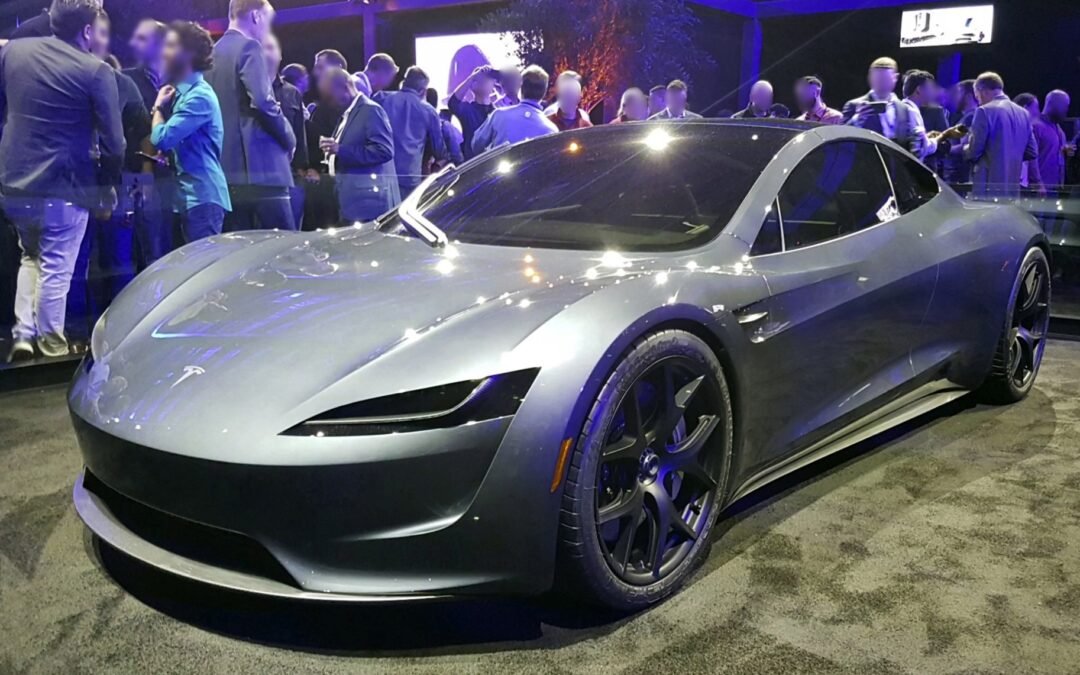
Tesla has put its long-delayed second-generation Roadster back under the spotlight, confirming an October 1 reveal with a short “Go for launch” teaser. For an electric sports car first previewed in 2017, even a firm event date is major news. The Roadster has spent years as one of the EV industry’s most tantalising promises; now Tesla has another chance to show that the halo car is moving beyond concept status.
A reveal date, but production remains the real test
The announcement gives enthusiasts a date to circle, but it does not yet answer the questions that matter most: final specifications, pricing, manufacturing location and the first customer deliveries. Tesla originally targeted production around 2020, and the repeated delays have made buyers understandably cautious. TechCrunch reports that Elon Musk has previously said production could still follow the reveal by another 12 to 18 months. That would place the practical launch well after the October presentation, so the event should be treated as a product unveiling rather than an immediate showroom arrival.
Expect performance to dominate the presentation. Tesla has long pitched the Roadster as an electric supercar intended to reset expectations for acceleration and speed, while more recent comments have encouraged speculation about SpaceX-influenced technology. None of those headline-grabbing possibilities should be considered final until Tesla publishes production-ready specifications. The bigger strategic question is whether a low-volume flagship can restore some excitement around the brand while its mass-market Model 3 and Model Y face an increasingly crowded field.
BYD builds a bigger bridge to global markets
That competitive pressure is visible in fresh news from BYD. Reports say the Chinese automaker has ordered 10 additional vehicle carriers, each capable of transporting about 9,200 cars. Once delivered, the expansion would take BYD’s owned fleet to 18 ships with combined capacity above 130,000 car-equivalent units. Owning more of the logistics chain can reduce reliance on third-party shipping and give BYD greater control as it pushes into overseas markets. It is not as glamorous as a supercar reveal, but it may be just as important to the global EV contest: affordable electric cars only disrupt new markets if manufacturers can deliver them at scale.
Electric momentum spreads beyond passenger cars
Commercial transport is also accelerating. Amazon is deploying more than 50 Mercedes-Benz eActros 600 battery-electric trucks in Germany by the end of 2026, with the first 27 already handed over, according to Automotive World. Heavy trucks have demanding range, payload and charging requirements, so real fleet use is a meaningful test of battery-electric technology beyond private cars. At the household level, attention is also turning to bidirectional charging. A growing group of EVs can supply electricity back to a home, making the vehicle useful as both transport and backup energy storage when compatible hardware is installed.
The next few weeks will show whether Tesla can turn years of Roadster anticipation into a credible production plan. Meanwhile, BYD’s shipping investment and Amazon’s electric-truck rollout underline a broader reality: the EV race is no longer only about spectacular specifications. Manufacturing discipline, logistics, charging and practical energy features will decide which companies convert attention into lasting adoption.
Sources: TechCrunch, Electrek, and Automotive World.