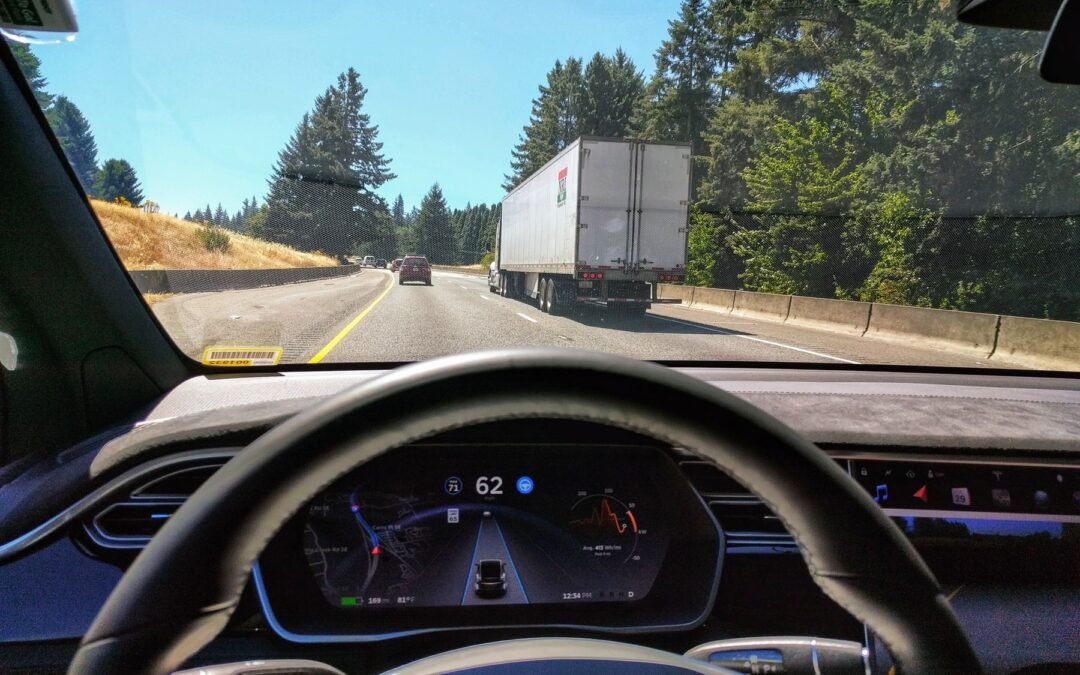
Tesla is pushing another meaningful software update to owners, with Full Self-Driving (Supervised) version 14.3.7 arriving inside vehicle software 2026.21.5. The release is less about one headline-grabbing trick and more about making assisted driving smoother, more measurable and easier to use at the end of a journey. For drivers following Tesla’s rapid over-the-air development cycle, that is important: the company’s biggest product changes increasingly happen on the screen and in the neural network rather than on a showroom floor.
What changes with Tesla FSD 14.3.7
According to the published release notes, Tesla has upgraded the reinforcement-learning stage used to train the FSD neural network, targeting improvements across a wide range of driving situations. The update also gives owners clearer feedback about system performance. Drivers can see how far the car travelled under FSD (Supervised) without an intervention, while the Self-Driving app records the longest intervention-free streak. These figures do not turn the system into an autonomous chauffeur, but they should make progress—and weak spots—more visible to owners.
Navigation at the destination receives attention too. Parking options can now appear on the map as the car arrives, addressing a part of the trip where driver-assistance systems can feel least polished. Tesla continues to label FSD as supervised, meaning the person behind the wheel must remain attentive and ready to take control. That distinction matters as software capability expands faster than regulation and public understanding. Version 14.3.7 should therefore be judged as an advanced driver-assistance update, not permission to stop monitoring the road.
BYD turns up the ownership-value pressure
While Tesla works on software, BYD is attacking another major barrier to EV adoption: the total ownership proposition. BYD India has introduced August festive benefits on eligible electric models, including finance rates starting at 7.77 percent, a complimentary two-year maintenance package, charging coupons on selected variants and extended warranty coverage of up to 200,000 kilometres. The exact value depends on the model and local terms, but the broader message is clear. EV makers are competing not only on range and performance, but also on finance, servicing and buyer confidence.
Australian shoppers are seeing similar pressure in the market. BYD’s official offers page lists limited-time drive-away campaigns during August and September, reinforcing the brand’s aggressive retail push. This matters for Tesla because BYD now has a broad mix of battery-electric and plug-in hybrid products, giving it more ways to attract households that are interested in electrification but not yet committed to a pure EV. Price certainty and after-sales support can be as persuasive as an extra burst of acceleration.
Electric family transport gains momentum
Hyundai is also widening the EV conversation beyond conventional crossovers. Its Neira concept previews a three-row electric people mover for Indonesia, with local production planned and a practical seven-seat layout in focus. The project reflects a larger industry shift toward region-specific EVs. Rather than selling one global body style everywhere, manufacturers are adapting electric platforms for local family needs, road conditions and price expectations. More electric vans and MPVs would give larger families a credible alternative to petrol-powered people movers.
The takeaway for EV enthusiasts is that the competition is becoming genuinely multidimensional. Tesla is using software and fleet learning to refine the driving experience after purchase; BYD is making the financial package harder to ignore; and Hyundai is targeting underserved vehicle segments. Faster charging and longer range will remain important, but the next phase of EV growth may be won through better software, lower ownership friction and vehicles that fit more kinds of everyday life.