
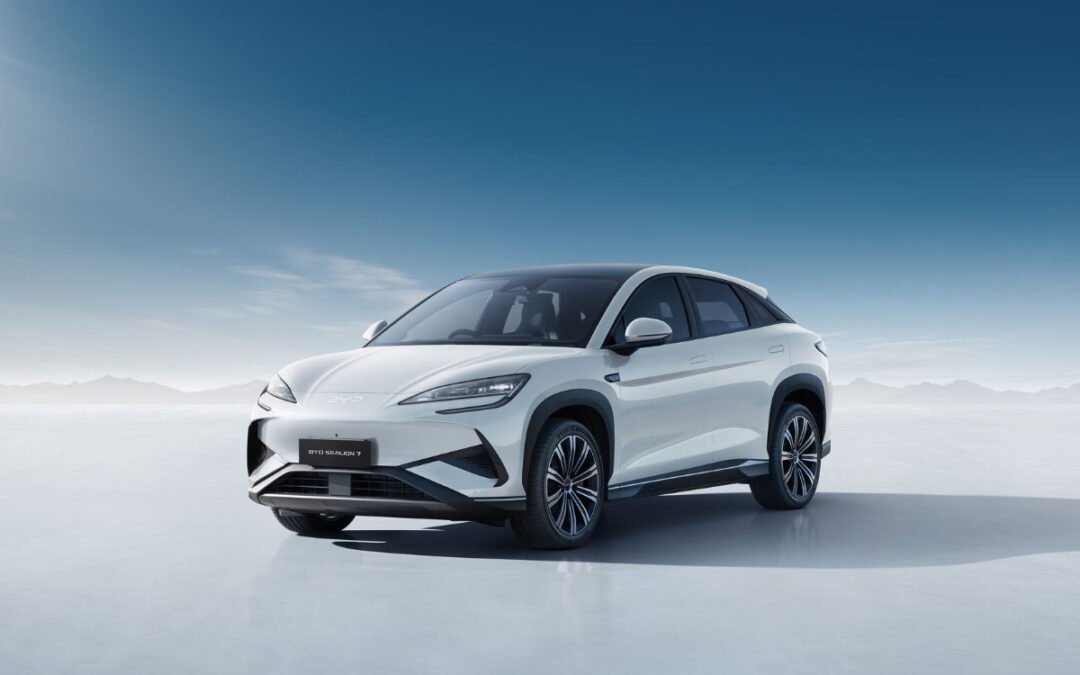
Australia’s electric-car transition is beginning to connect with its energy transition in a much more practical way. BYD and Amber Electric have added the popular Sealion 7 electric SUV to what they describe as the country’s largest residential vehicle-to-grid trial, giving eligible owners a path to use the car’s battery to support their home and export electricity when the grid needs it. For drivers, that turns a parked EV from transport into a potentially useful household energy asset.
A bigger test for “batteries on wheels”
The Amber program, backed by $13.6 million from the Australian Renewable Energy Agency, is scaling to 1,000 households. More than 50 V2G sites are already operating and over 8,000 people are on the waitlist, according to the Smart Energy Council announcement. The basic idea is straightforward: charge the vehicle when electricity is cheap or abundant, then discharge some energy to the home or grid when wholesale prices rise. Actual savings will depend on driving patterns, electricity prices, compatible charging equipment and program rules, but the trial should produce valuable real-world evidence.
The Sealion 7 joins BYD’s Atto 3 in the program, widening the pool of compatible cars. BYD says the fastback SUV has attracted more than 30,000 Australian customers since its local launch in February 2025. Importantly, the company says applicable battery warranty coverage will remain in place for participating Sealion 7 owners. Eligible trial participants can also access a six per cent discount from the base recommended retail price on selected Sealion 7 and Atto 3 variants, subject to conditions. That combination of warranty assurance and a purchase incentive may help V2G move beyond technically curious early adopters.
Tesla storage shows the other side of the grid
The V2G news arrived alongside another Australian battery milestone involving Tesla. RWE’s Limondale battery in New South Wales uses 144 Tesla Megapacks and is designed to provide at least 400 MWh of storage. Registered to charge at up to 100 MW and discharge at 50 MW, it can sustain its maximum discharge for eight hours. Large stationary batteries and thousands of bidirectional EVs solve different problems, but they are complementary: utility-scale systems can shift substantial blocks of renewable power, while connected cars could add flexible capacity close to homes and local networks.
Electric utes keep pushing into the mainstream
Australia’s EV choice is also broadening beyond SUVs and sedans. MG has confirmed its U9 EV dual-cab ute at $78,990 before on-road costs, with local showroom arrivals expected between October and December 2026. The manufacturer quotes 430 km of WLTP driving range and 3.5 tonnes of braked towing capacity. Those figures will need to be judged in real working conditions—especially with a trailer or payload—but they put an electric option into a segment that has long been central to Australian buyers and largely resistant to electrification.
For EV enthusiasts, the bigger takeaway is that the market is moving past the car alone. The next phase will be shaped by how vehicles interact with homes, chargers and the wider electricity system, while new body styles make battery power relevant to more drivers. If Australia’s expanded V2G trial proves convenient and financially worthwhile, the humble driveway could become an important part of the clean-energy grid.