
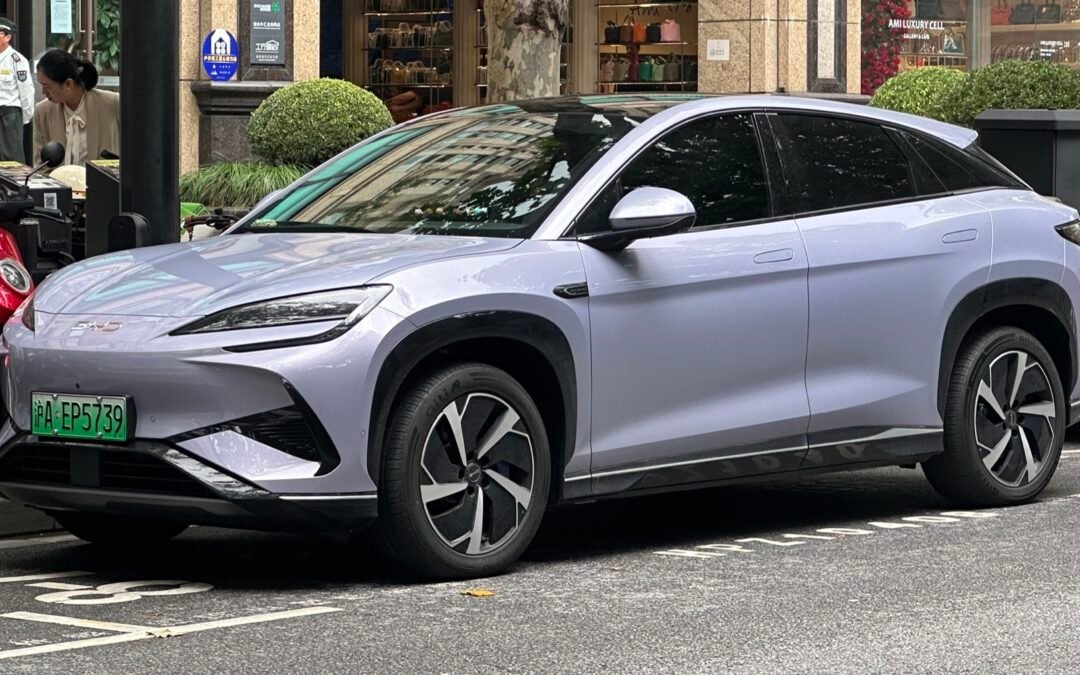
BYD has opened the second half of 2026 with fresh momentum, reporting a sharp July sales increase powered by rapidly expanding demand outside China. The result is more than another big monthly number: it shows how quickly the global electric-vehicle contest is changing as Chinese brands push into new markets and established rivals lean on software, charging and brand loyalty to hold their ground.
Exports put BYD back on the accelerator
BYD sold 419,211 new-energy vehicles at wholesale in July, up 21.8% from a year earlier, according to company data reported by Reuters and CnEVPost. It was the automaker’s third consecutive month of year-on-year growth and a marked acceleration from June. The standout figure was overseas passenger-vehicle and pickup sales: 179,841 units, a 124.3% jump from July 2025 and another record. That international volume now represents a substantial share of BYD’s monthly business, giving the company a useful counterweight when pricing pressure or demand softness weighs on its enormous home market.
The mix matters because BYD’s reported new-energy total combines battery-electric vehicles and plug-in hybrids. Both formats help the company address markets at different stages of charging-network development, while its broad portfolio stretches from affordable city cars to premium models. For buyers, the practical consequence is intensifying competition on price, range and standard equipment. For other manufacturers, BYD’s export surge raises the pressure to localise production, secure battery supply and introduce vehicles tailored to regional tastes rather than treating exports as an afterthought.
Tesla answers with software, not another model
Tesla’s latest move highlights a different competitive weapon. Its 2026.26 Summer Update has begun rolling out with navigation upgrades such as Preferred Routes, Automatic Navigation and the ability to set a desired arrival-energy level. Published release notes also list expanded Grok commands, camera previews in the mobile app, custom vehicle wraps in the on-screen visualisation, traction-control modes on selected models and Caraoke scoring. Availability varies by vehicle, region and infotainment hardware, but the package is a reminder that an EV can gain useful features after purchase. That software cadence remains one of Tesla’s clearest points of differentiation while BYD scales its manufacturing and overseas retail footprint.
Battery transparency becomes the next battleground
Another development from China could eventually matter to every EV shopper: tighter expectations for battery-health information. CarNewsChina reported that a new standard limits the relative deviation between a vehicle’s displayed state-of-certified-energy value and a physical measurement to 5%. More trustworthy health estimates could make used EVs easier to value and give owners clearer evidence of degradation over time. Separately, China’s updated mandatory battery-safety standard took effect in July, adding tougher thermal and impact requirements. Together, these measures signal that the next phase of EV competition will be judged not only by showroom range, but also by durability, transparency and confidence years into ownership.
For EV enthusiasts, July’s numbers point to a market that is growing more global and more sophisticated at the same time. BYD’s export machine is gathering pace, Tesla continues to improve cars already on the road, and regulators are focusing on the battery data buyers need. The winners will be the brands that combine scale, smart software and long-term trust rather than excelling at only one of them.