
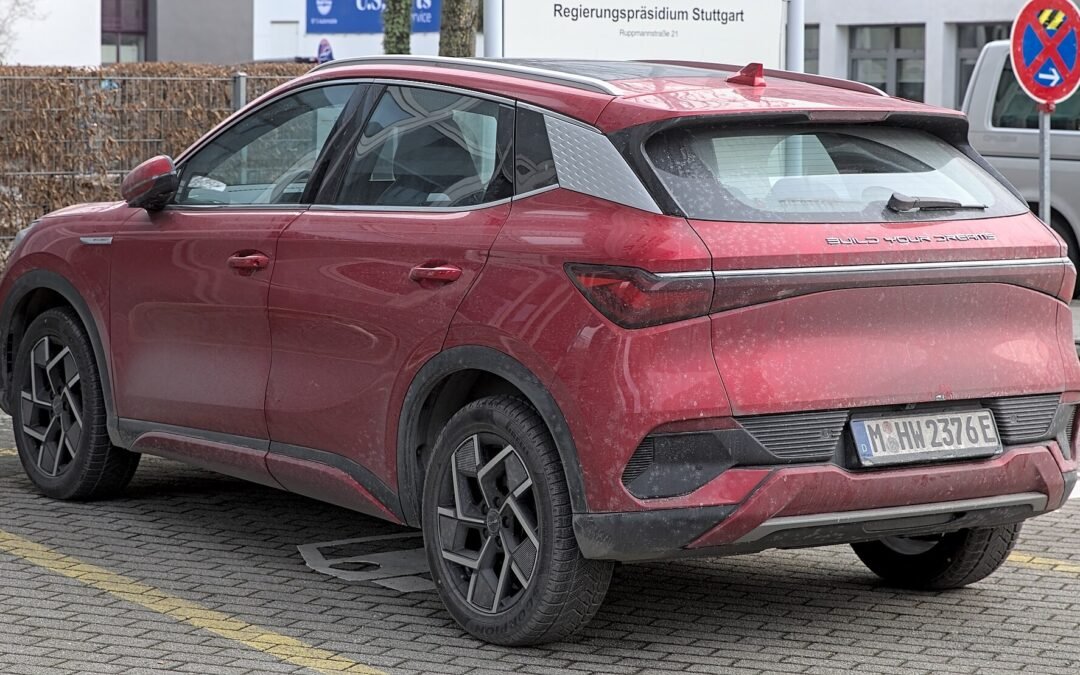
BYD has opened the second half of 2026 with fresh momentum. The Chinese new-energy vehicle giant sold 419,211 vehicles at wholesale in July, up 21.8% from a year earlier, as booming exports helped counter a still-challenging home market. The result marks a third consecutive month of year-on-year growth and underlines why BYD remains the company setting the pace in the global electric-car volume race.
Exports do the heavy lifting
The most striking number in BYD’s July update was outside China. Overseas sales of passenger vehicles and pickups reached a record 179,841 units, surging 124.3% year on year, according to Reuters. Based on the company’s total, CnEVPost estimated domestic sales at about 239,370 vehicles, roughly 9% lower than a year ago. That split matters: BYD is no longer relying chiefly on China’s vast market to support expansion. Its mix of battery-electric cars and plug-in hybrids, broad pricing coverage and fast-growing distribution network are increasingly turning it into a mainstream international automaker.
More models, more markets
The overseas push is visible in individual markets as well as the headline figures. In the Philippines, BYD distributor ACMobility says the brand is continuing to expand its electrified-vehicle presence, with the Atto 2 and new Seal 5 broadening the local range, as reported by The Philippine Star. This is the practical side of BYD’s export surge: more right-sized products, local retail support and options spanning fully electric and plug-in-hybrid powertrains. For buyers, that expansion can mean stronger price competition and more choice; for established carmakers, it raises the cost and speed required to stay relevant.
China’s EV challengers keep accelerating
BYD is leading the day’s news, but it is not alone in posting substantial volumes. XPeng announced 38,027 vehicle deliveries for July, while Xiaomi EV exceeded 30,000 monthly deliveries for a fourth consecutive month. Tesla, meanwhile, continues to compete on the software experience as its 2026.26 summer update reaches cars with features including preferred-route selection, automatic navigation suggestions and the ability to set a desired arrival-energy level. Together, the updates show how the EV contest is being fought on several fronts at once: factory scale, international reach, affordability and the digital features owners use every day. The contrast is revealing. BYD’s immediate advantage is its ability to sell a wide range of electrified vehicles in growing numbers across borders, while Tesla can use a large connected fleet to add useful functions without a workshop visit. Newer Chinese brands are trying to combine both strengths, making rapid hardware launches and frequent software improvements part of the same ownership proposition.
For EV enthusiasts, BYD’s July performance is another sign that the industry’s centre of gravity is becoming more global and more competitive. Export growth can be volatile, and domestic pressure in China has not disappeared, but a record overseas month gives BYD a powerful platform for the rest of 2026. The likely winners will be consumers, who should see quicker product cycles, wider model choice and sharper value as BYD, Tesla and a crowded field of challengers push one another harder.