
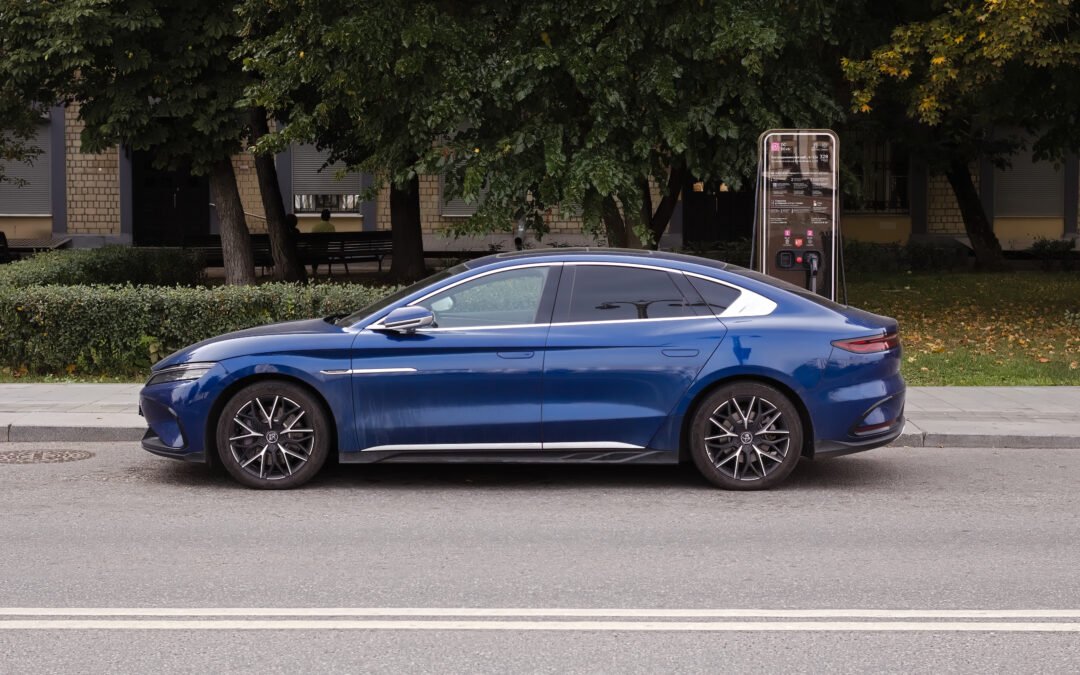
BYD’s latest electric-vehicle news is not just about range, charging speed or headline-grabbing acceleration. A newly published Chinese patent points to a quieter but important frontier: making parked EVs smarter about what is happening around and underneath them.
BYD’s underbody detection idea
According to CarNewsChina, BYD has published a patent for an underbody living-organism detection system, listed by China’s National Intellectual Property Administration under application CN122200729A. The concept is straightforward but clever: when a vehicle powers down, it captures a reference image of its underside. Later, real-time images are compared with that baseline, so the system can focus only on areas that have changed rather than wasting processing power on static parts such as battery enclosures, suspension components, aero panels and structural hardware.
That matters because the space beneath a parked vehicle is messy from a computer-vision point of view. Shadows move, dirt builds up, road debris appears and lighting conditions change. BYD’s proposed approach narrows the problem before applying recognition algorithms to decide whether a changed region could be an animal, person or other living target. It is only a patent, not a confirmed production feature, but it shows how EV makers are pushing safety tech beyond driver assistance and cabin monitoring. For families, pet owners and crowded urban streets, that kind of low-speed, parked-car awareness could become a meaningful everyday feature.
BYD’s product push continues
The patent lands as BYD keeps widening its global line-up. In Europe, the Dolphin G DM-i plug-in hybrid hatchback has been detailed ahead of autumn 2026 deliveries, with German order books opening from €28,990 before subsidies. CarNewsChina reports the model is designed specifically for Europe and will be built at BYD’s Szeged plant in Hungary. Higher trims use an 18.3 kWh battery for up to 105 km of WLTP electric driving, giving BYD a sharp-priced urban model that can cover many daily trips without using petrol.
At the other end of the showroom, BYD is preparing a much larger statement car. Electrek reports that the upcoming Great Han flagship sedan has appeared in Chinese regulatory filings with dimensions bigger than a Tesla Model S or Lucid Air, and with single- and dual-motor versions listed. The top version is said to produce a combined 570 kW, or about 764 hp, while BYD’s Blade Battery 2.0 and flash-charging hardware are expected to support a CLTC driving range of up to 1,008 km. Real-world range will be lower, as always, but the ambition is clear: BYD wants to compete from affordable city cars to luxury long-distance EVs.
Charging and performance are moving too
Elsewhere in the EV world, Xiaomi is reviving an idea Tesla teased more than a decade ago: an automatic robotic charging arm for the home garage. Electrek says Xiaomi’s system can locate the charge port, plug in and disconnect without the driver handling the cable, tying into the brand’s smart-home ecosystem. Meanwhile, Peugeot has shown the production E-208 GTi at Le Mans, bringing 280 hp and a classic hot-hatch badge into the electric era.
The takeaway for EV fans is that the next phase of electric motoring will be about more than bigger batteries. The most interesting developments are happening around the edges: smarter sensing, easier charging, sharper software and a broader spread of models. BYD’s latest patent may never get a flashy launch event, but it hints at the kind of practical intelligence that could make future EVs feel safer and more useful every day.