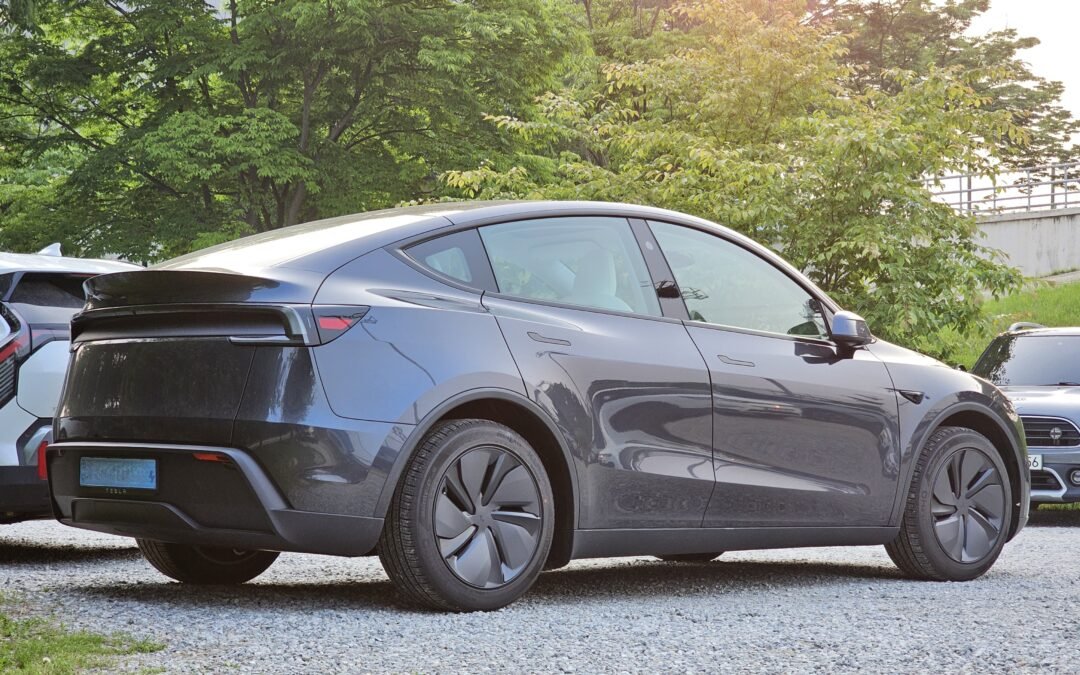
Tesla’s next big software push in Europe has run into a very practical question: should a driver-assistance system ever be allowed to speed? That is the issue now hanging over Tesla Full Self-Driving (Supervised), after Sweden’s transport authority reportedly urged European Union officials to reject approval unless the system’s ability to exceed posted limits is removed. For a company trying to turn software into its biggest automotive advantage, it is a timely reminder that regulators may be just as important as raw AI capability.
Europe puts Tesla’s FSD claims under the microscope
According to Electrek, Sweden’s position was outlined ahead of a June 30 EU technical committee discussion on a possible wider rollout of Tesla’s FSD (Supervised). The objection is not about electric motors, battery range or charging speed; it is about trust. If an assisted-driving feature can choose a speed above the legal limit, even with a human supervising, European safety officials are likely to ask whether the feature is genuinely ready for mass deployment.
The timing is awkward for Tesla because the company is also teasing new FSD conveniences, including remembered parking preferences and Grok-powered voice interaction that could let drivers give more natural instructions. Those features sound useful and very Tesla, but they do not erase the core concern: advanced driver assistance has to behave predictably in the dull, rule-bound moments of real traffic. Europe’s message appears simple: impressive software is not enough if it bends road rules.
Tesla’s execution challenge is bigger than code
There was another leadership wrinkle this week, with Electrek reporting that Tesla’s head of quality, Kahiree Gans, is leaving for Stellantis. One personnel move does not define a car company, but quality leadership matters when Tesla is juggling refreshed models, software-led differentiation and increasingly aggressive rivals. The brand still has enormous scale and one of the world’s strongest charging ecosystems, yet customers are no longer short of alternatives.
That competitive pressure is clearest in Australia. The Driven’s latest market data showed EVs hitting a record 20 per cent share in May, with Tesla and BYD both central to the surge while newer entrants such as Jaecoo, Geely and Zeekr add more choice. The Australian market is becoming a useful snapshot of the global EV transition: Tesla remains a headline act, BYD is converting scale into showroom momentum, and Chinese brands are filling price and body-style gaps that legacy automakers were slow to address.
BYD keeps pushing the charging conversation
BYD’s momentum is not only about cheaper cars. Recent reporting from InsideEVs highlighted the industry’s rapid charging build-out, including BYD’s plan to bring thousands of high-power, five-minute-style chargers to new markets. Whether every driver will see those peak speeds in daily use is a separate question, but the direction is clear: charging speed is becoming a brand weapon. If BYD can pair affordable LFP battery know-how with a credible fast-charging network, it will put pressure on Tesla in one of Tesla’s traditional comfort zones.
For EV fans, the takeaway is that the next phase of the market will be fought on several fronts at once. Tesla has to prove its software can satisfy regulators as well as loyal owners. BYD has to turn rapid expansion into consistent service, charging and product quality. And buyers get the best outcome of all: more electric cars, faster charging promises and a tougher race to make EVs easier to live with.